Enterprise UX Work - Walkthrough
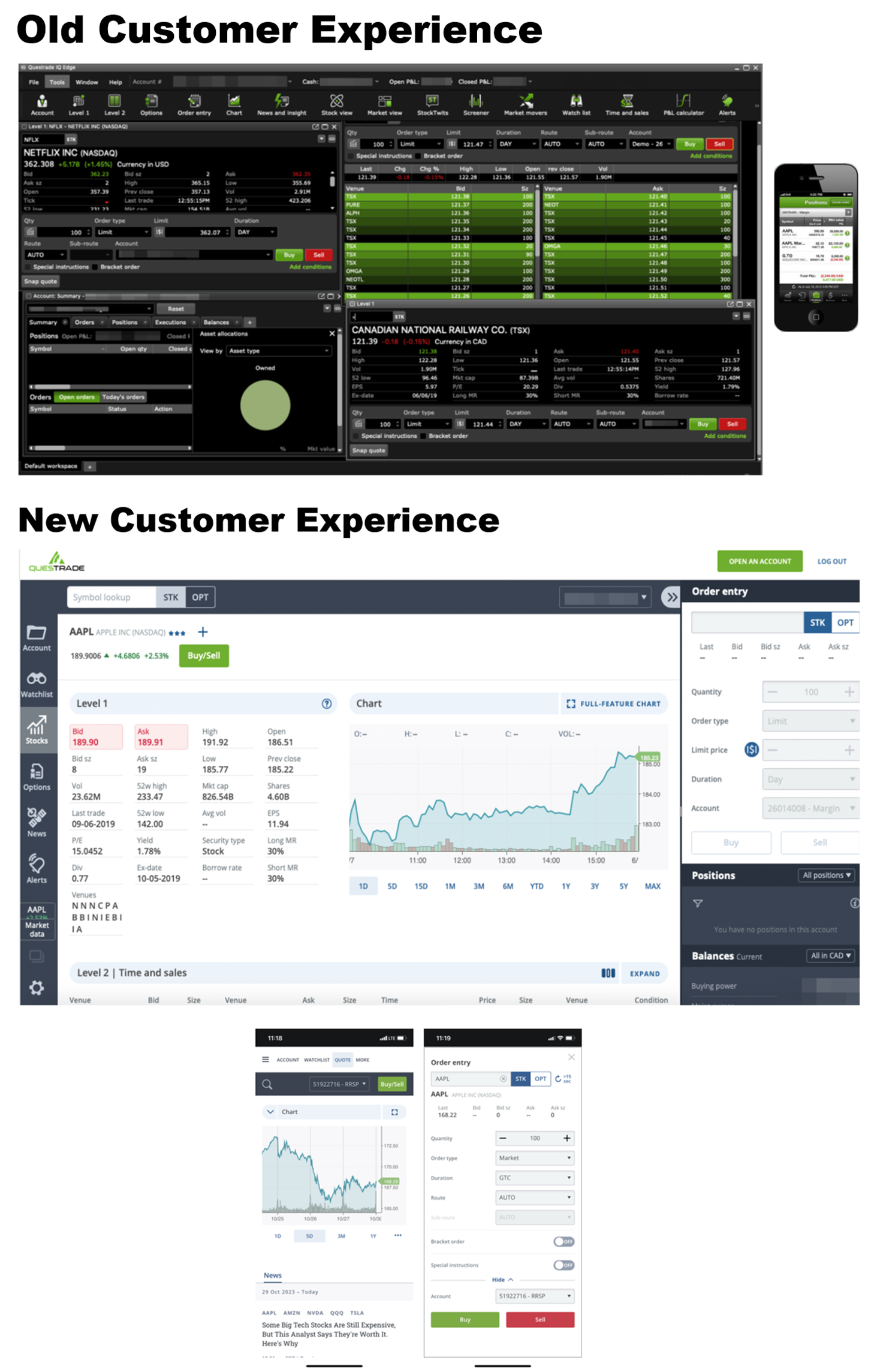
Customer Experience - Questrade Trading Platform
"Soup to Nuts": Project Definition Buy-in, Agile Product Owner Management, Project Management, Team Management, Innovation Buy-in Management, User Research Product Surveys, User Analytics, Personas, User Stories, Design Thinking Workshops, Purchase Behavior Psychology, Sitemaps and Screen/User Flows, Information and Content Architecture, Annotated Wireframes and Design Systems, Iterative Interactive Prototypes, Usability Testing, Cross Team Buy-in Change Management Facilitation, Micro-Interactions Documentation, Developer Documentation, WCAG 2.2 Accessibility, Enterprise Gamification, QA and Rollout ...
Note: proprietary information removed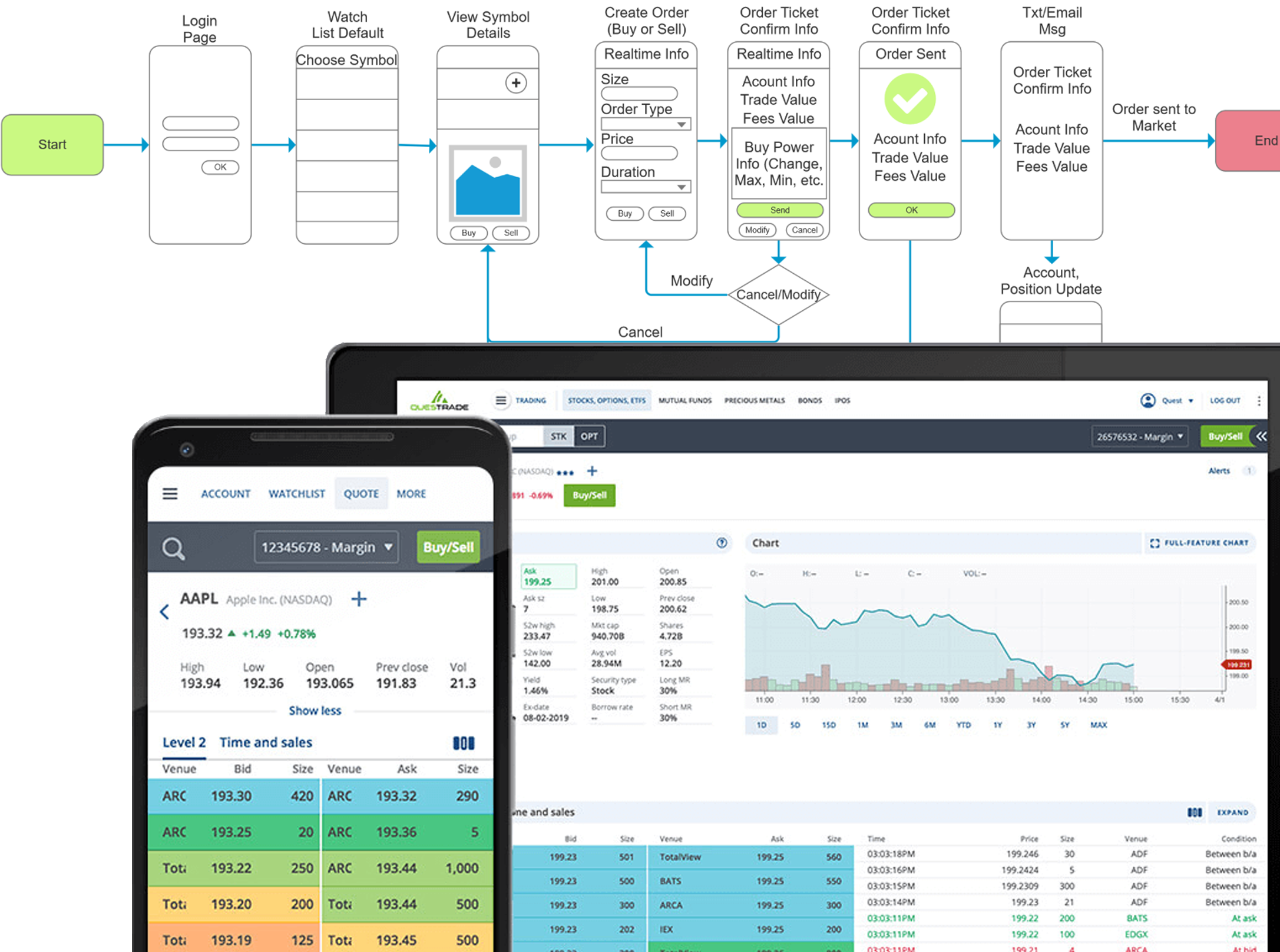
Summary Introduction
Questrade, a Retail Broker, needed a new Web and Mobile stock market trading platform. As a retail broker who first started in leasing one room with high speed data lines and licence subscriptions to 3rd party Windows based trading platform for day traders.
Situation: Redesign the Mobile app and create a web version of the windows based platform
Metric: 10% increase in Assets Under Management and "fix" 8 minutes it takes to do a mobile trade
Action: Using UX Research and modern UI design best practices, new version of of the Enterprise Delivery Portal was launched and adopted by 5000+ IT professionals
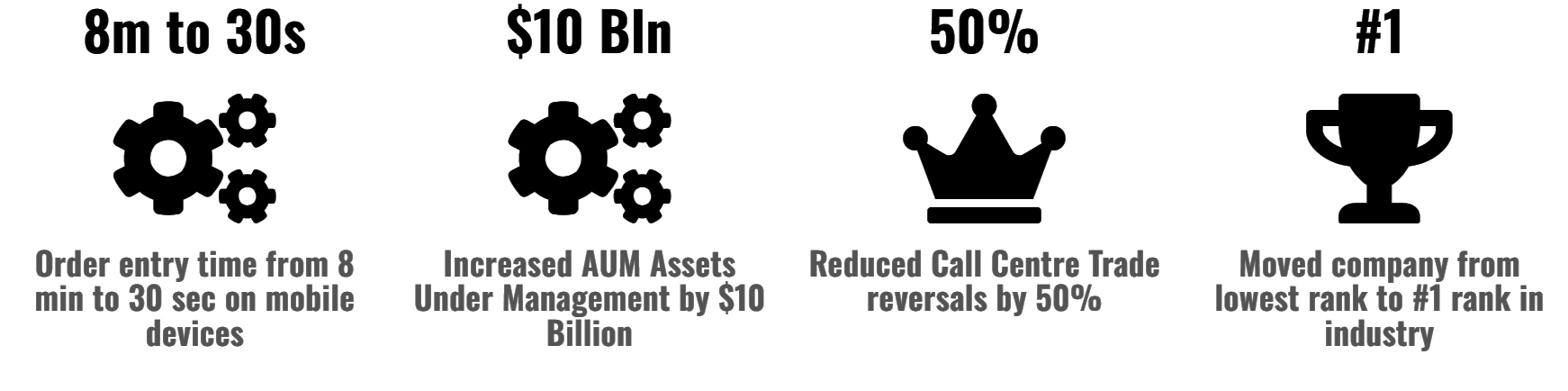
Result: Increase in Assets Under Management (details proprietary) as well as optimizing a trade from 8 minutes to 30 seconds; also moved company to top rank amongst competitors
Time bound: Launch in 8 months, faster than industry standard
They had the entrepreneurial spirit to identify and a gap in the market need to offer a web and mobile based retail trading platform to capture market share and to compete against the big banks.
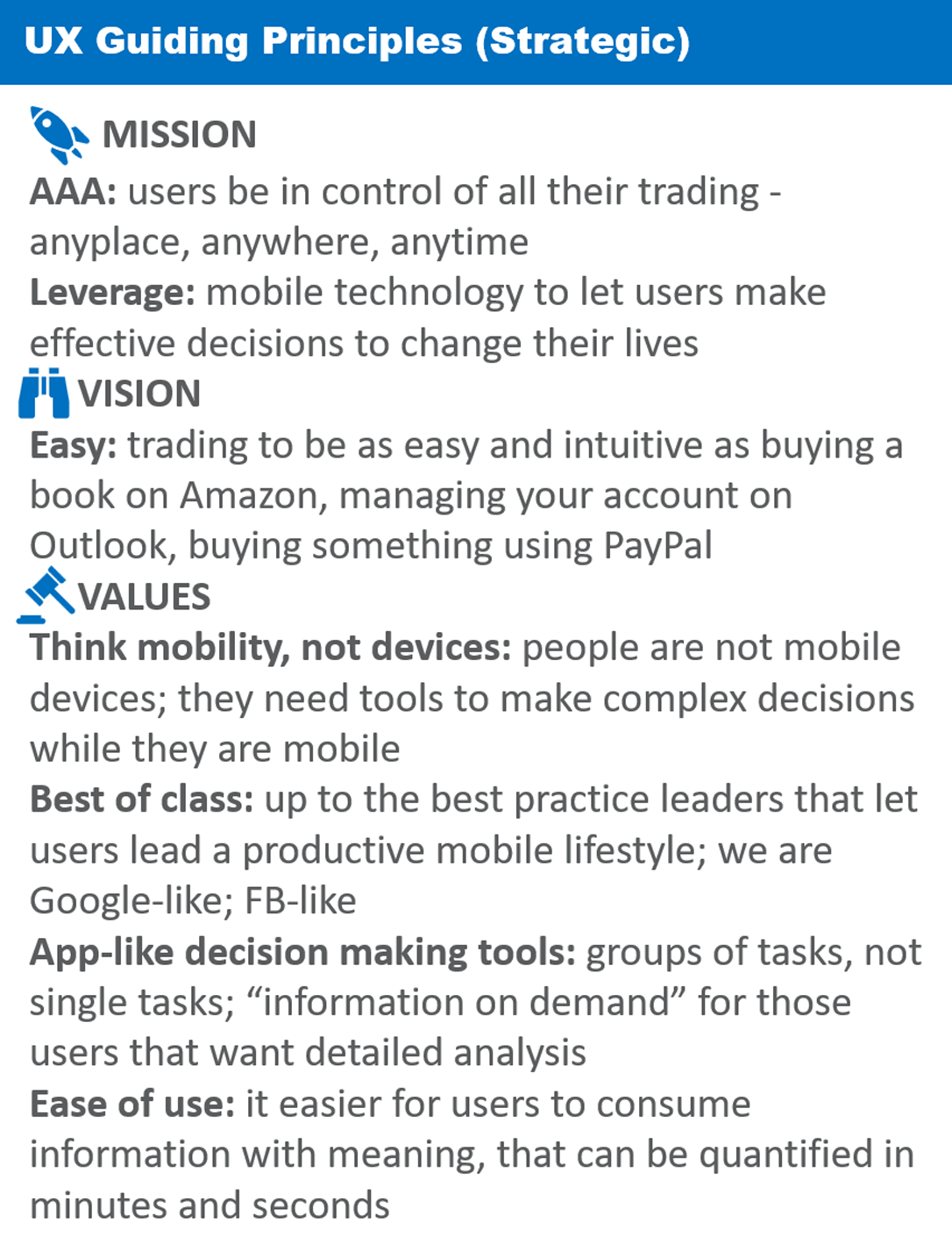
Key to the goals of capturing market share as an early FinTech adopter, they new they needed new thinking and using Design Thinking to go "all in" to create a new User Experience as the key to success.
Leading the FinTech UX efforts, I helped create new Mobile, Tablet and Desktop (Web) trading experience that propelled them to become the leading company in their category. The UX/UI framework is still used today, helping Questrade move from the bottom rung to the market leader.
"Strategy without tactics is the slowest route to victory. Tactics without strategy is the noise before defeat."
- Sun Tzu
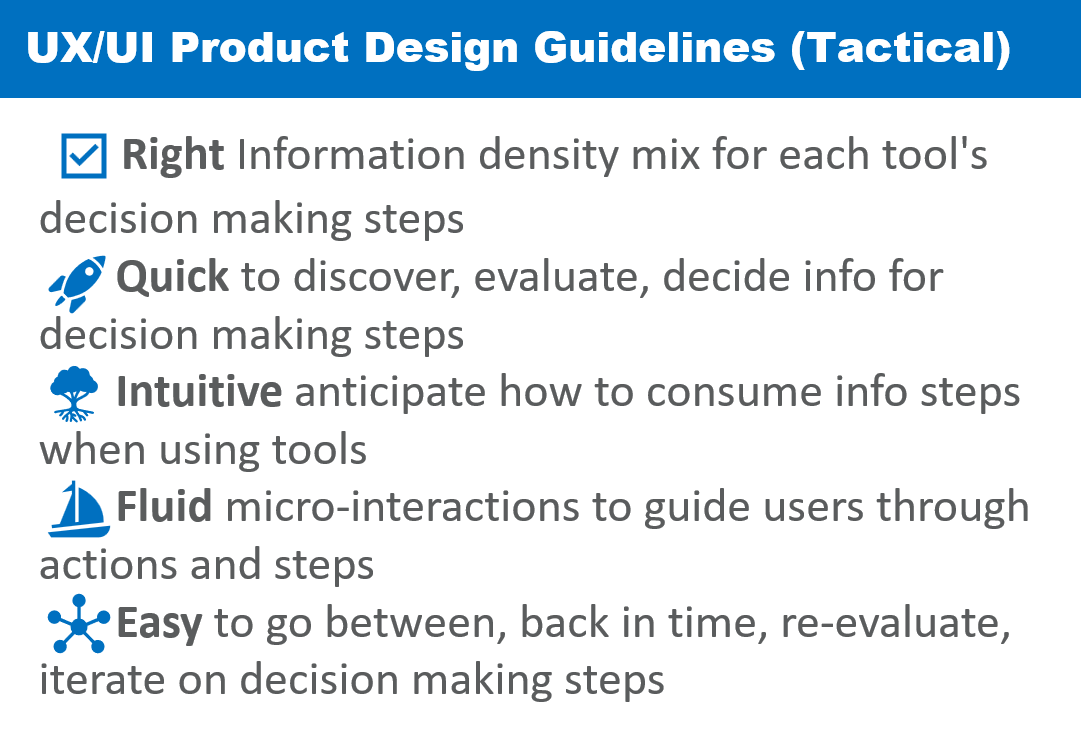
Successful Final Outcomes
My Role
- UX Lead
- Product Owner
Sprint Team Members: 8
- Product Owner, UX Lead (me)
- UI Developer
- Front End Developer
- 3 Full Stack Developer
- Front End Developer
- QA Tester
UX Deliverables
- Project Design Strategy
- Competitive Analysis
- Stakeholder Mapping
- Journey Maps
- Personas
- Feature Prioritization
- Sitemaps
- Solution Cards
- User/Screen Flows
- User Stories
- Wireframes
- Interactive Prototypes
- Usability Testing
- Design System
- Developer Component Library Documentation
Success Metrics
- Moved company from lowest rank to #1 rank in industry
- Increased AUM Assets Under Management by $10 Billion
- Reduced customer order entry time from 8 minutes to 30 seconds on mobile devices
- Doubled Mobile Trading Activities (Customer Satisfaction, Usage, Revenue)
- Reduced Call Centre Trade reversals by 50%
- Framework still used today
Case Study Details Walkthrough
Part 1/10 - Define: nswering a key question: Different Design for different Platforms?
What Do We Want to Be - Art of the Possible
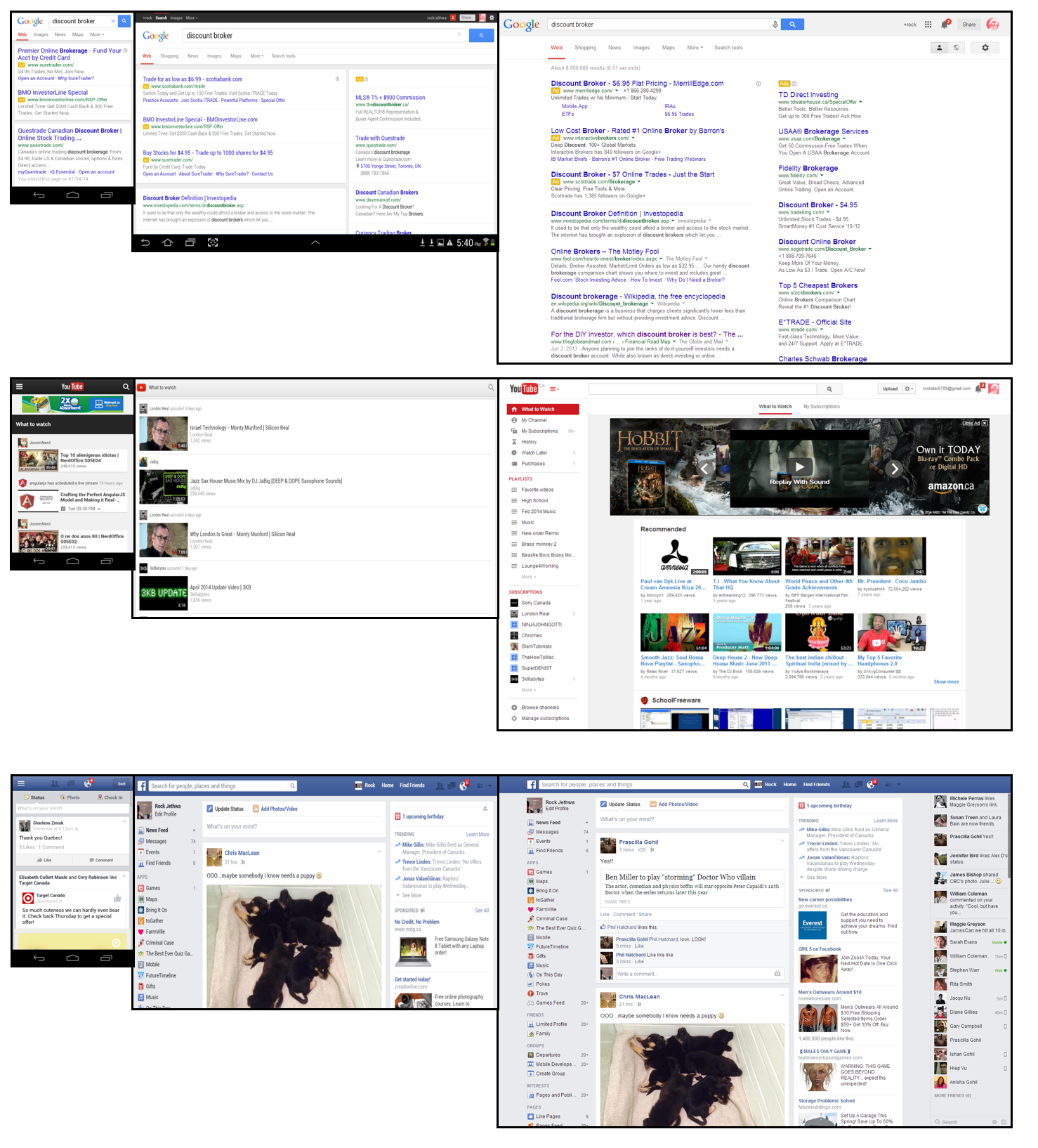
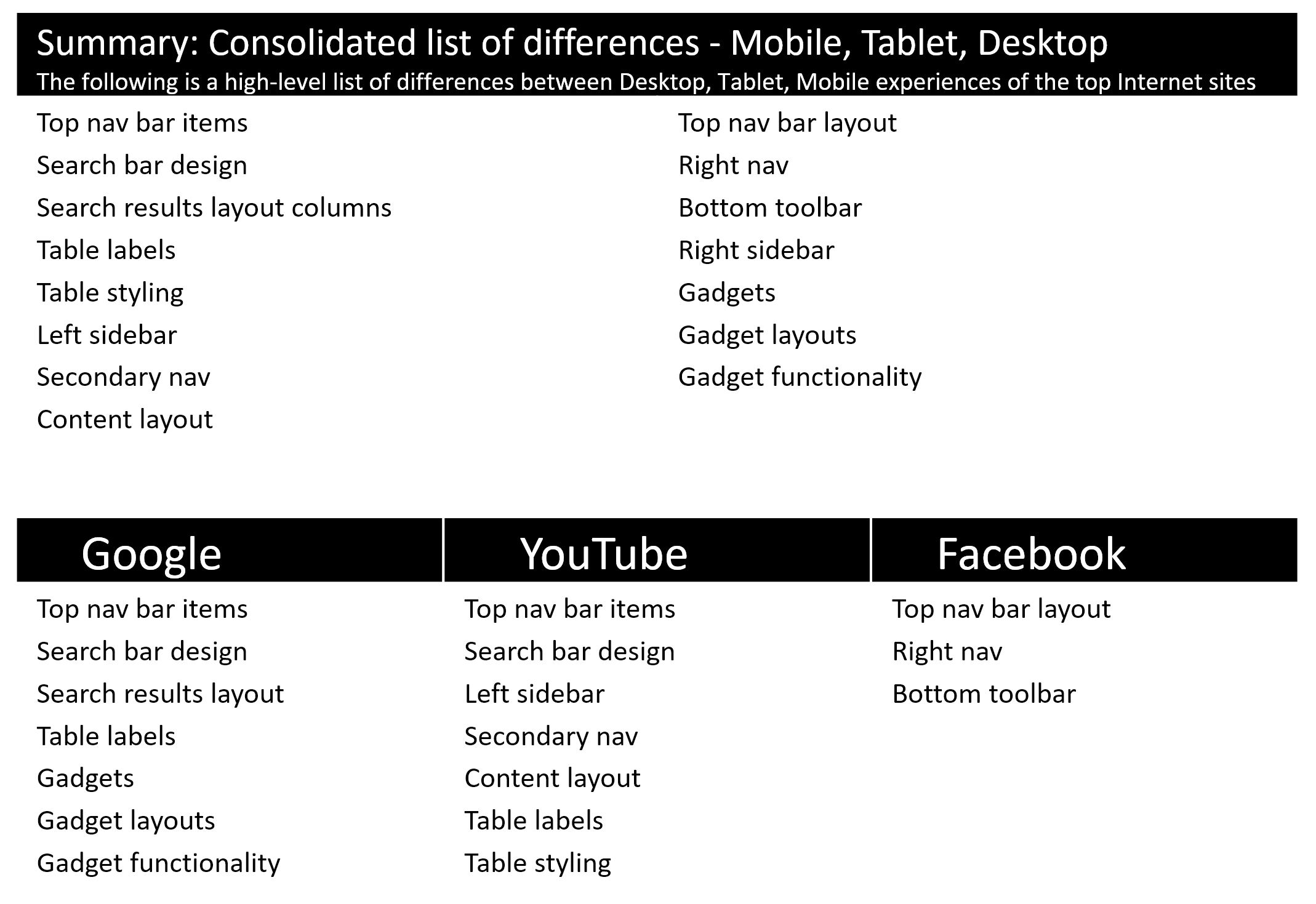
Business leadership was not sure if it's best to only design for Mobile devices, or if a Real Time Web based Cross Platform strategy was possible.
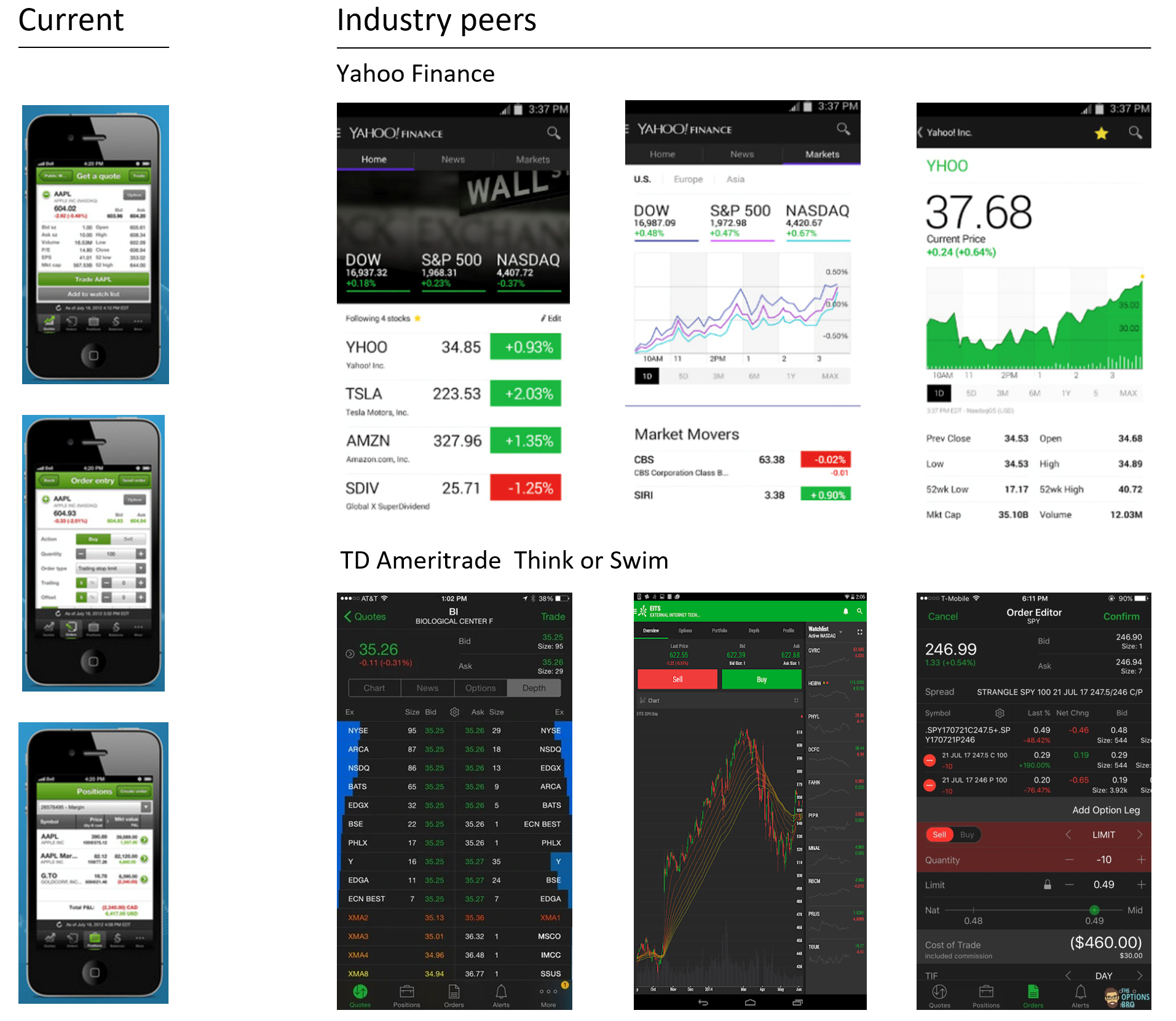
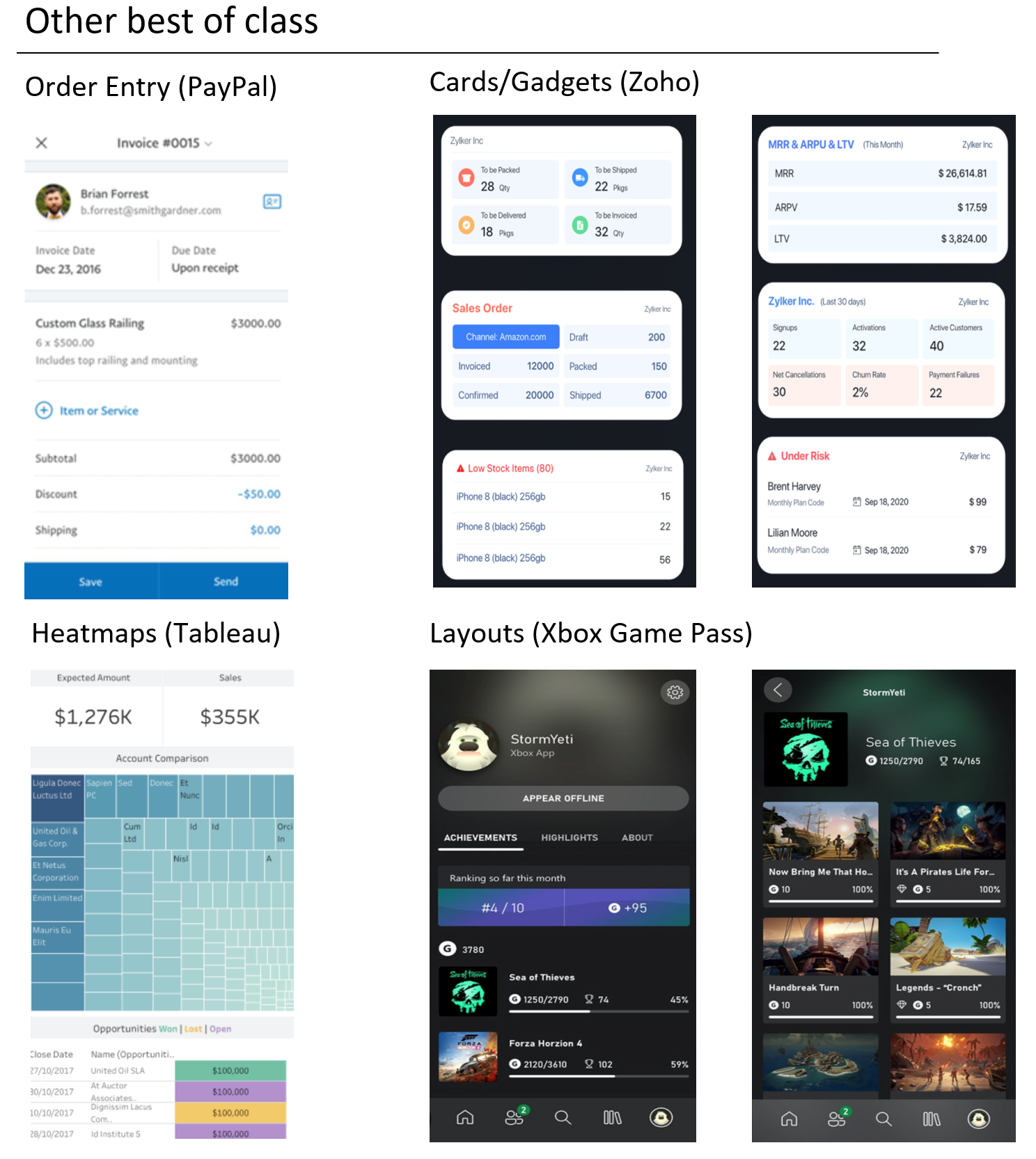
By comparing how other industry leaders approach online offerings, we were able to align and approve a Cross Platform strategy based on current technology constraints.
Part 2/10 - Define: Vision Alignment
UX Roadmap
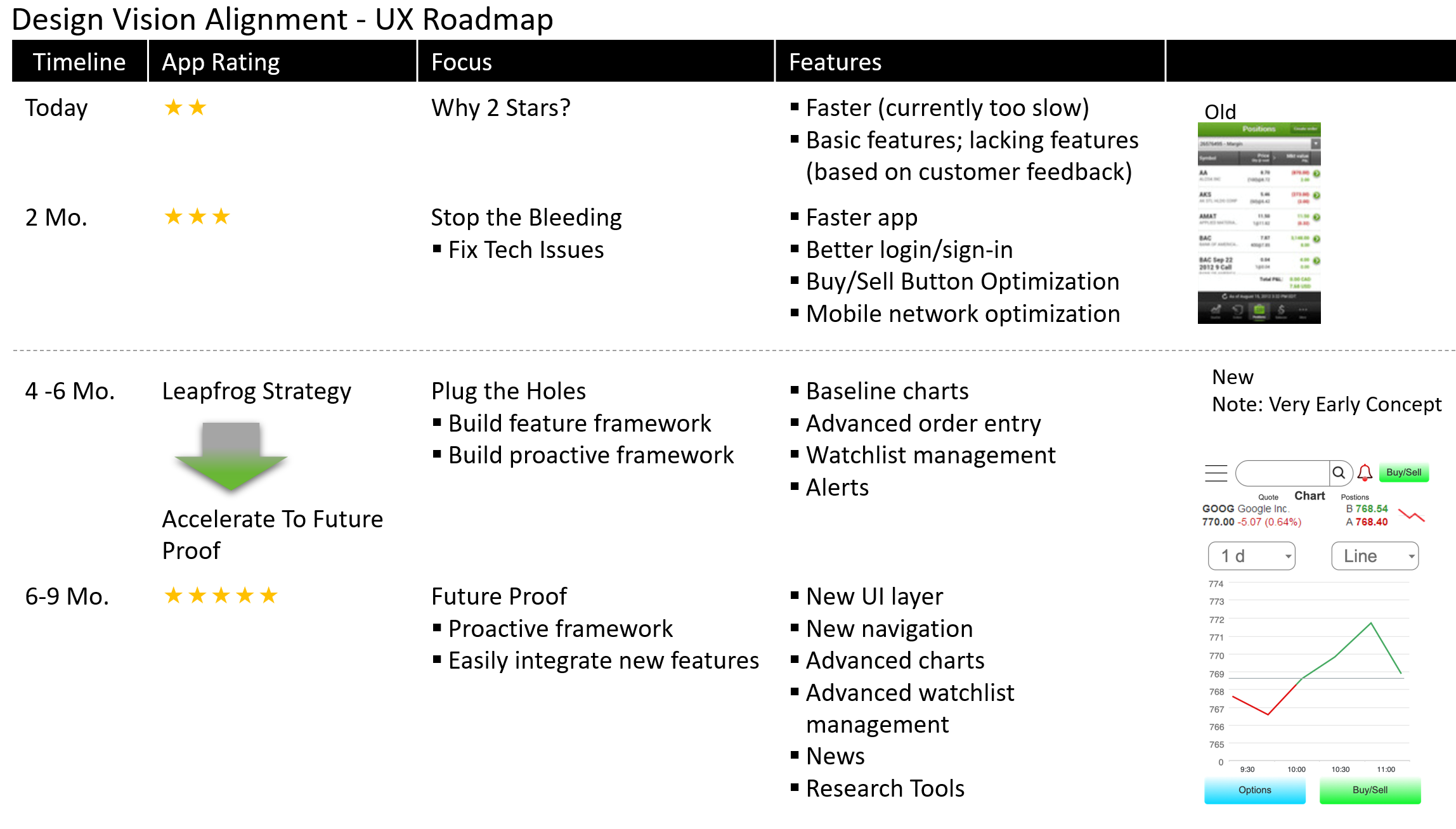
As Agile Sprint development was new to the organization, as I had the most experience, it was easier for the team to have a UX Roadmap to be able to plan for Development and Capacity Planning.
It was easier for the organization to understand what customers will do with the products, rather than the standard of "throwing" technology solutions in search of a customer problem
"The journey of a thousand miles begins with one step."
- Lao Tzu
Part 3/10 - Define: Journey Mapping, Personas
What are the current customer problems?
"You can't really understand another person's experience until you've walked a mile in their shoes"
- Ancient Proverb
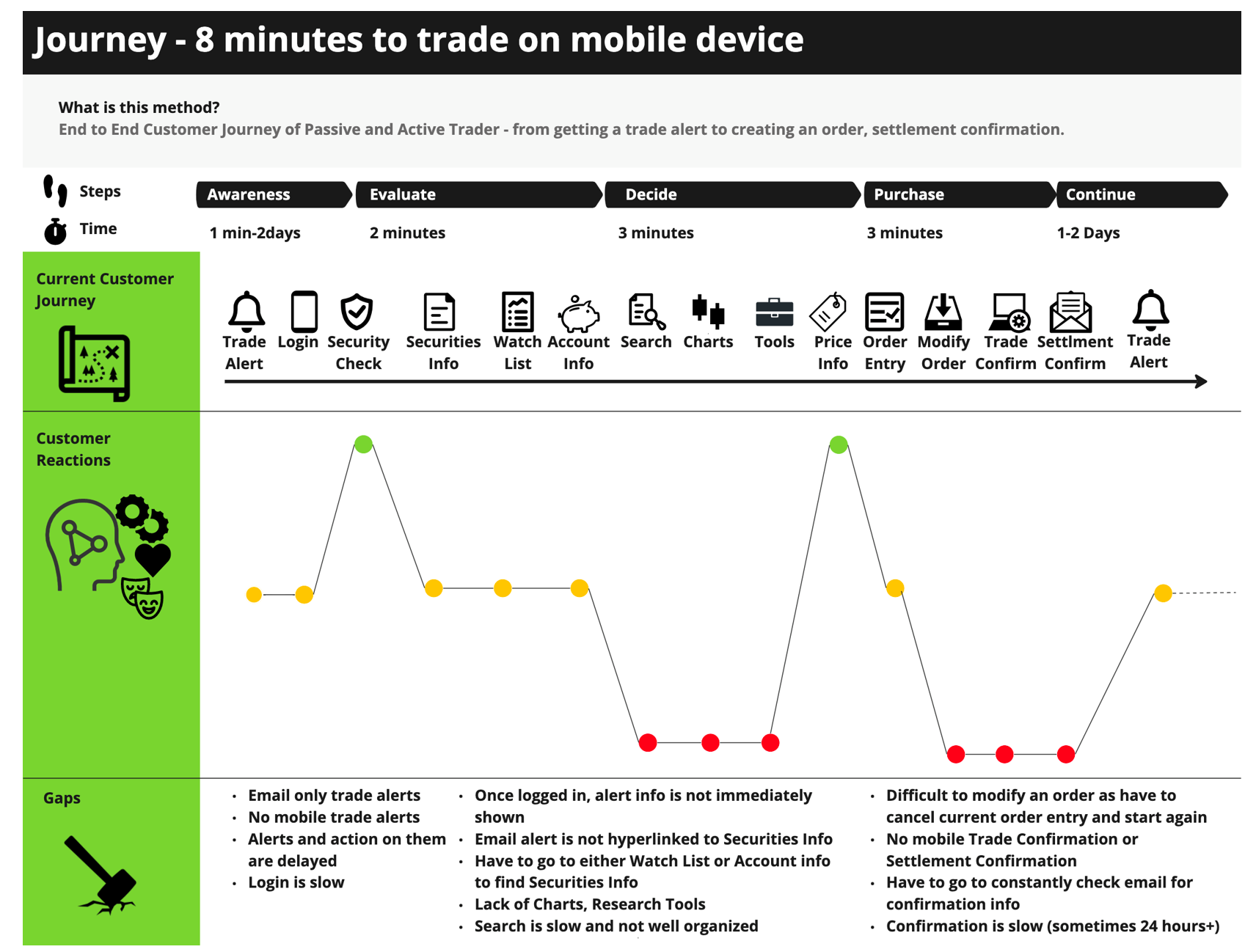
To understand customer problems, it was necessary to see the current state of trading, using UX Design Thinking Tools
Findings:
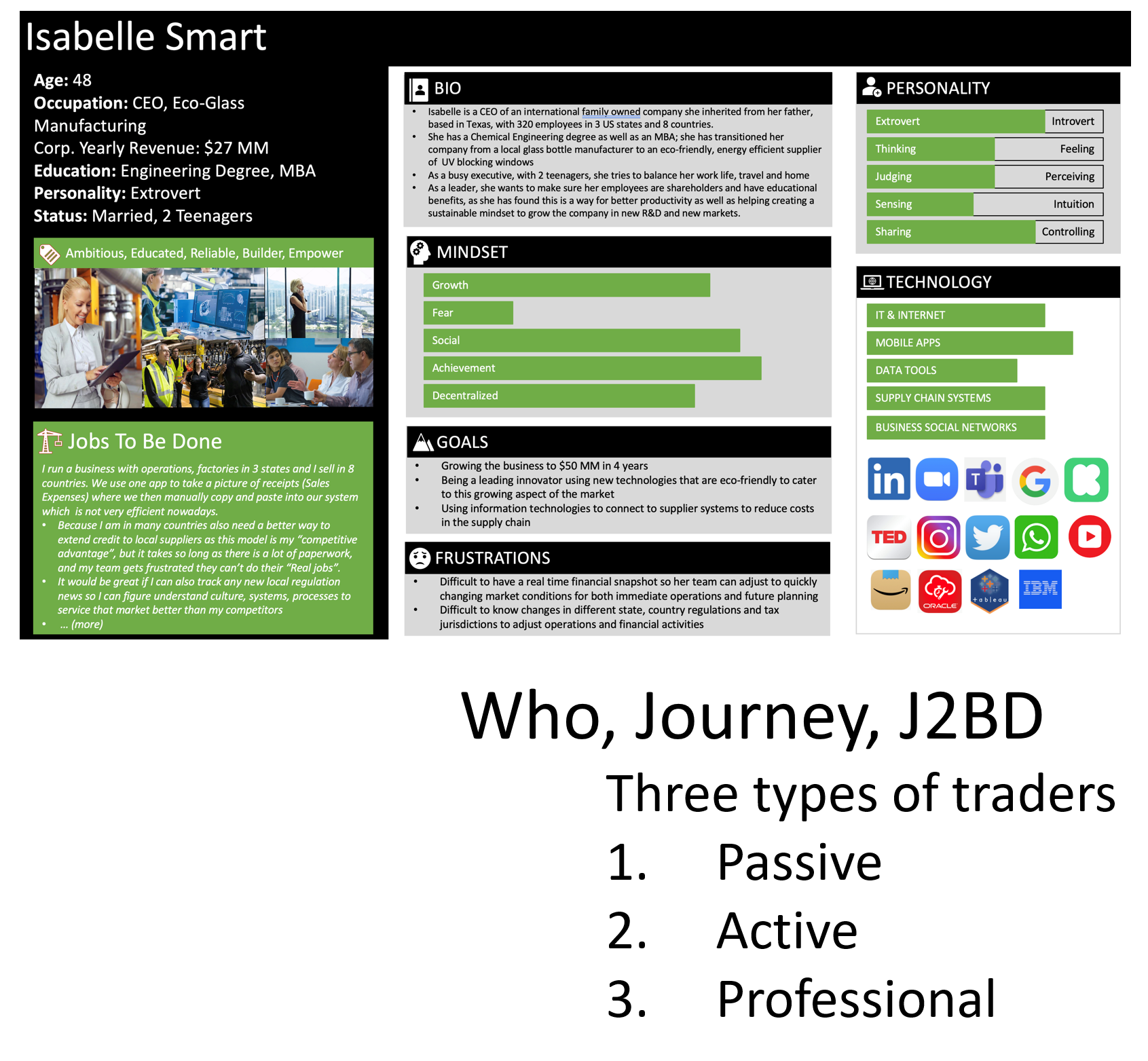
- Journey Maps, Personas were created so that it was clear that there are different types of users
- There is an opportunity to cater to a segment of Active Traders, Options Traders, as well as the Casual segment
- For Mobile Trading, it was found that it took 8 minutes to complete a trade on the current Mobile App, using the iOS Native Framework
- This helped understand that for trading, customers have a different need than basic iOS apps capabilities
Journey Map Example
Persona Example
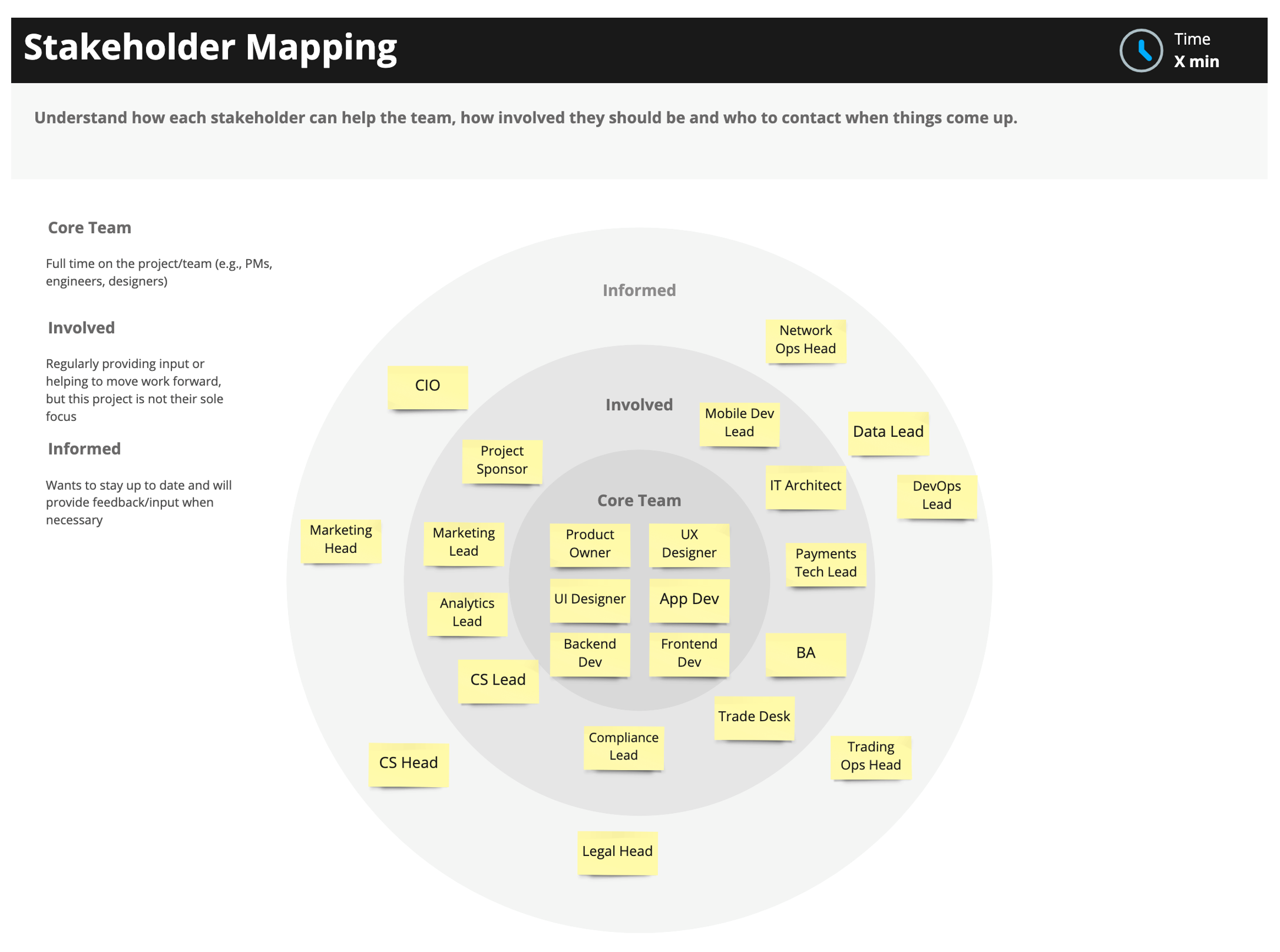
Part 4/10 - Design: Stakeholder Mapping
Who needs to be on the team for success?
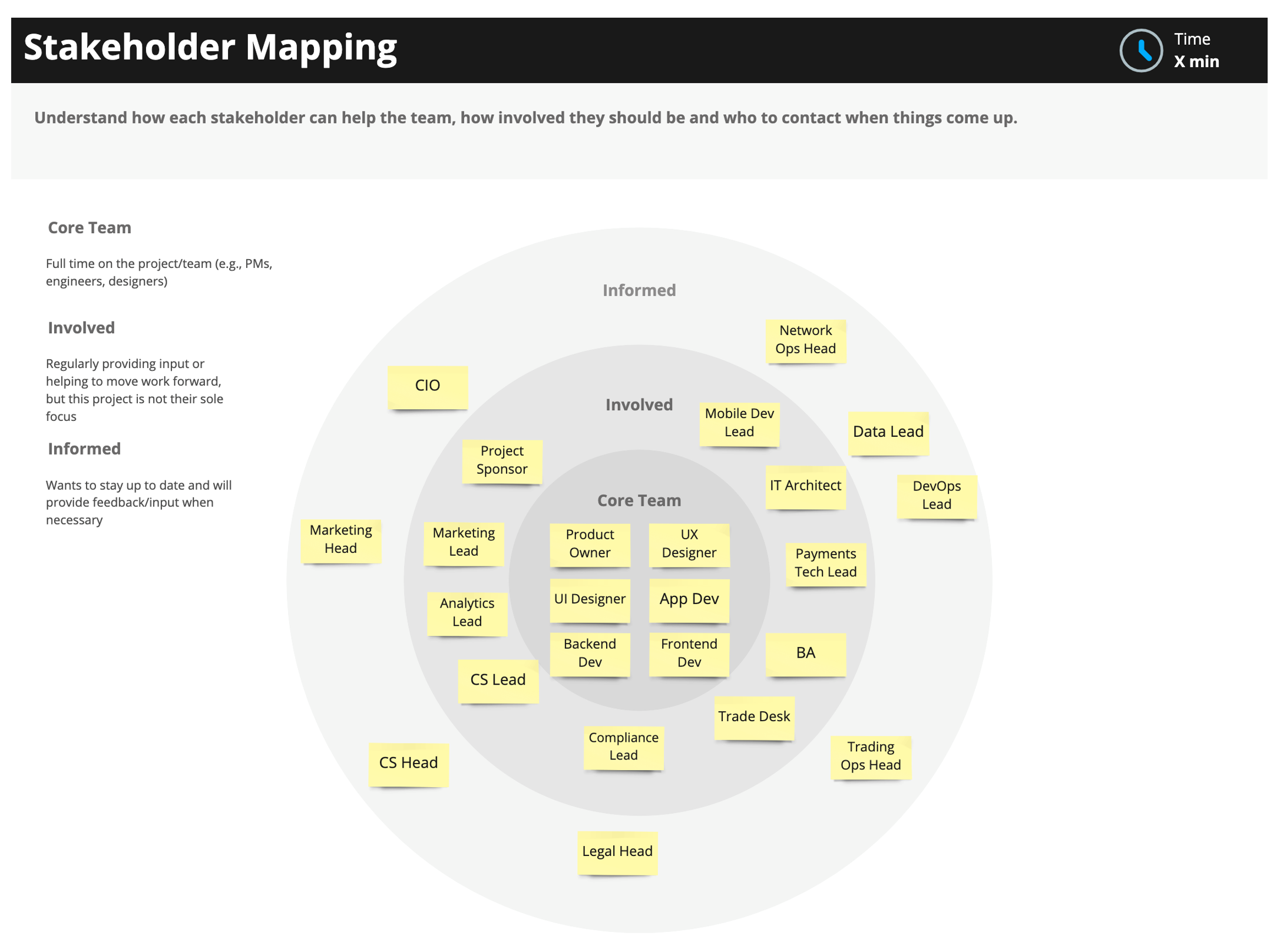
Before development could start, I lead Organizational Design sessions to help understand who we need to be successful, and how.
- We mapped out all the stakeholders, along with their roles and responsibilities
- Together, we were able to align and get "buy-in" for the Stakeholders/Pod/Agile Team/Experts as needed
- This was essential as the project needed to move into a modern Agile Framework
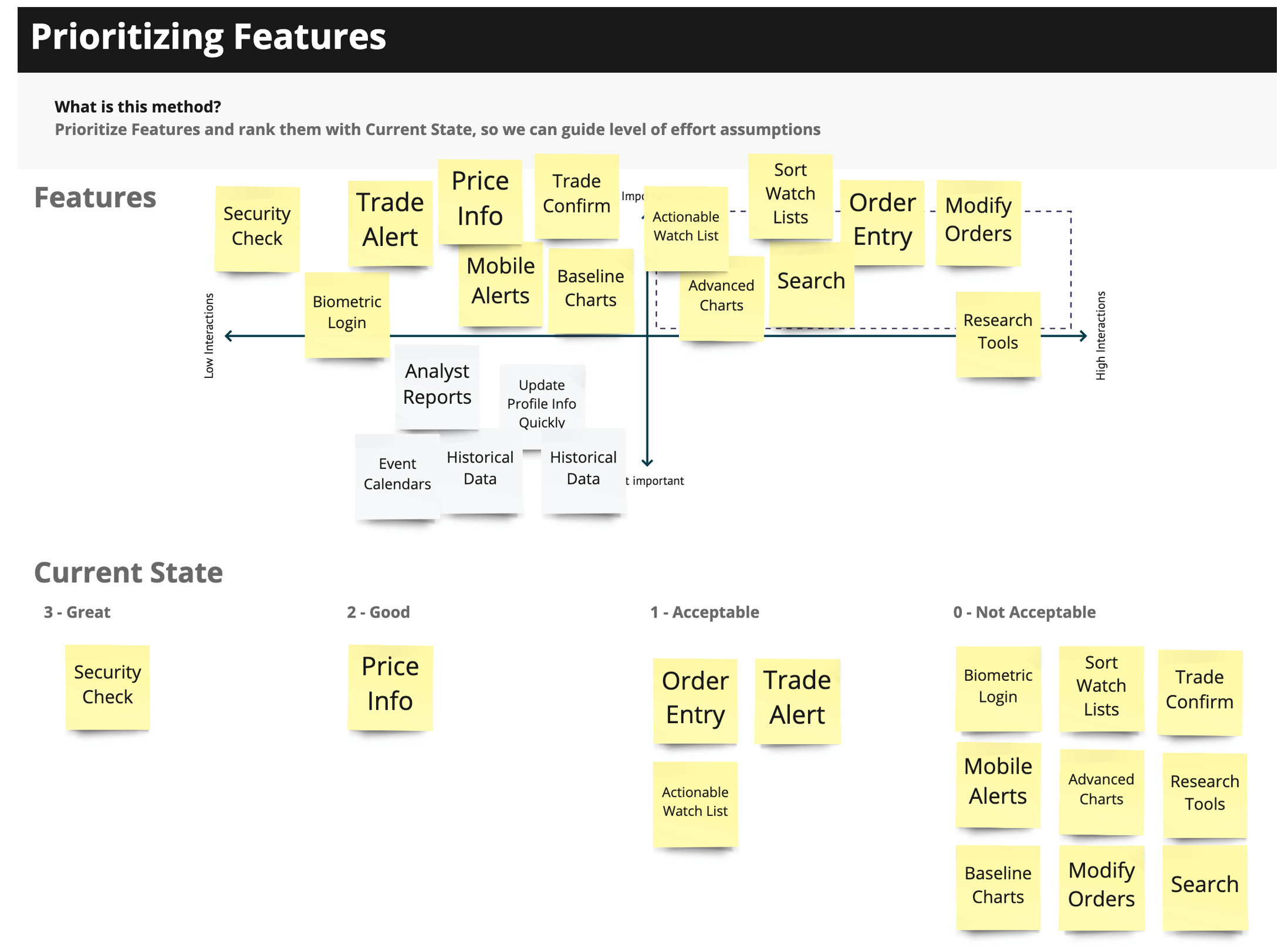
Part 5/10 - Design: Prioritizing, Grouping Feature Requests
Understanding what we want to build and how
Using Design Thinking techniques, the next step was to still a business design phase, where we mapped out features.
- Together we prioritized what we want to offer customers
- We had the right mix of stakeholders participating in the Design Thinking Sessions
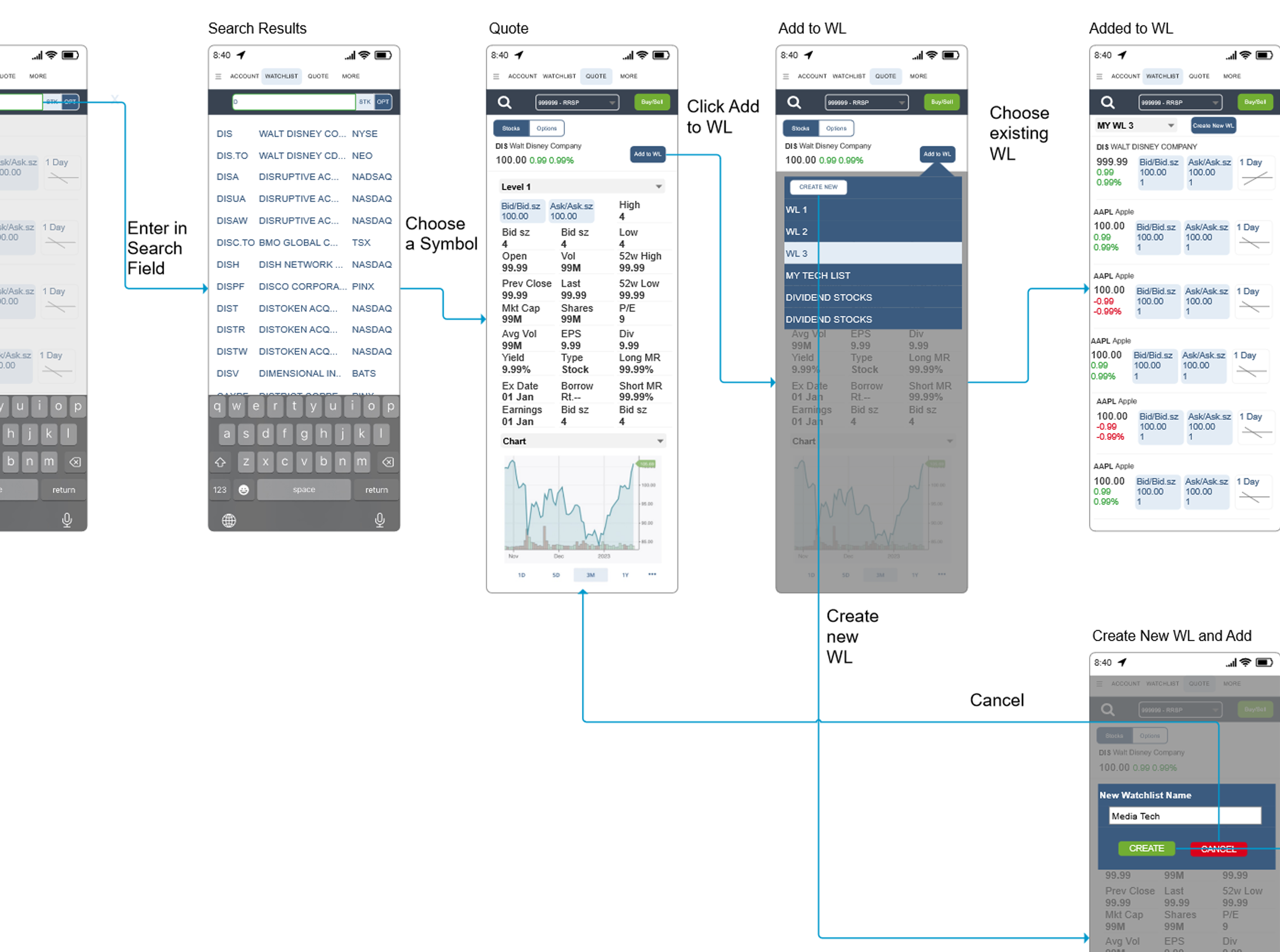
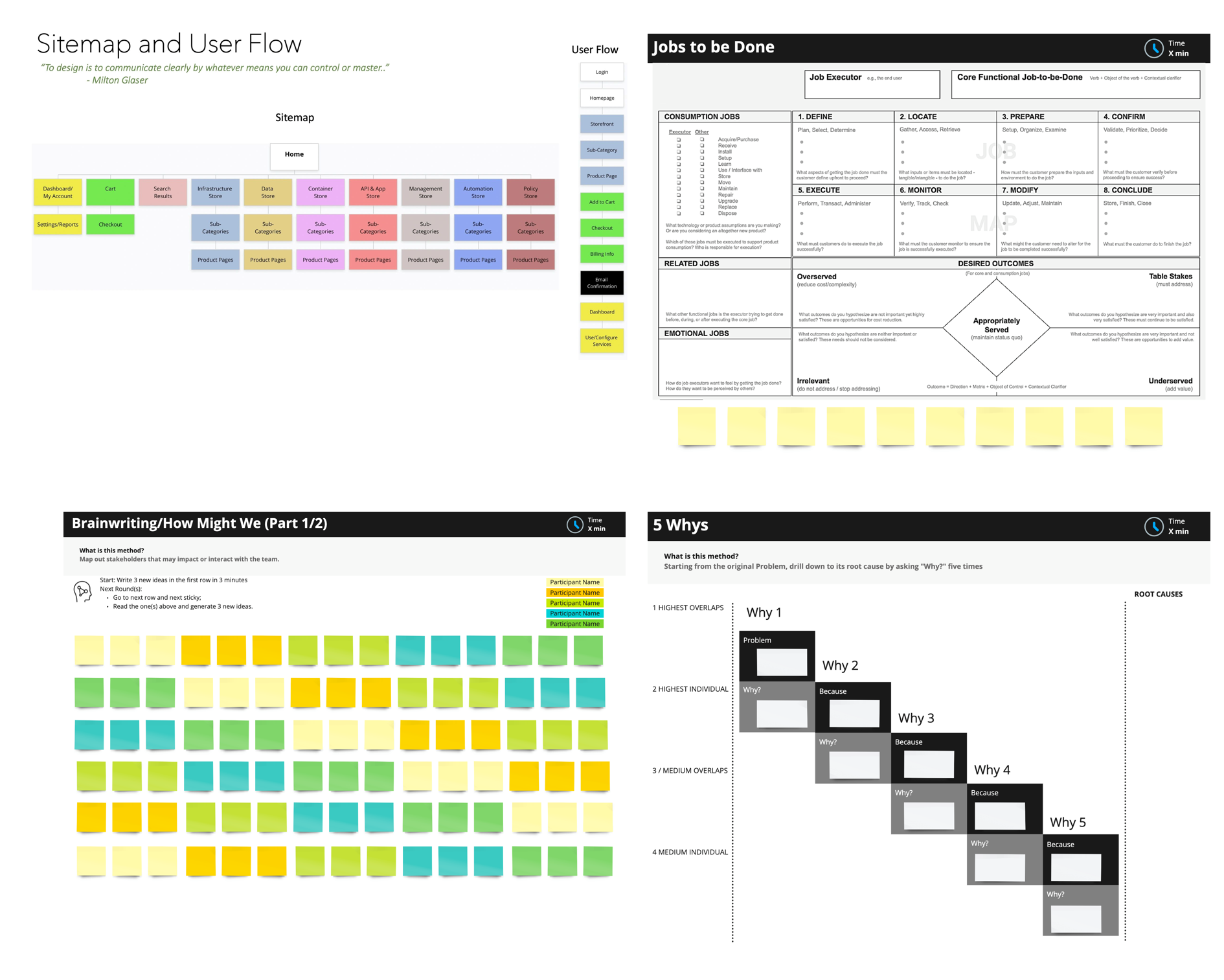
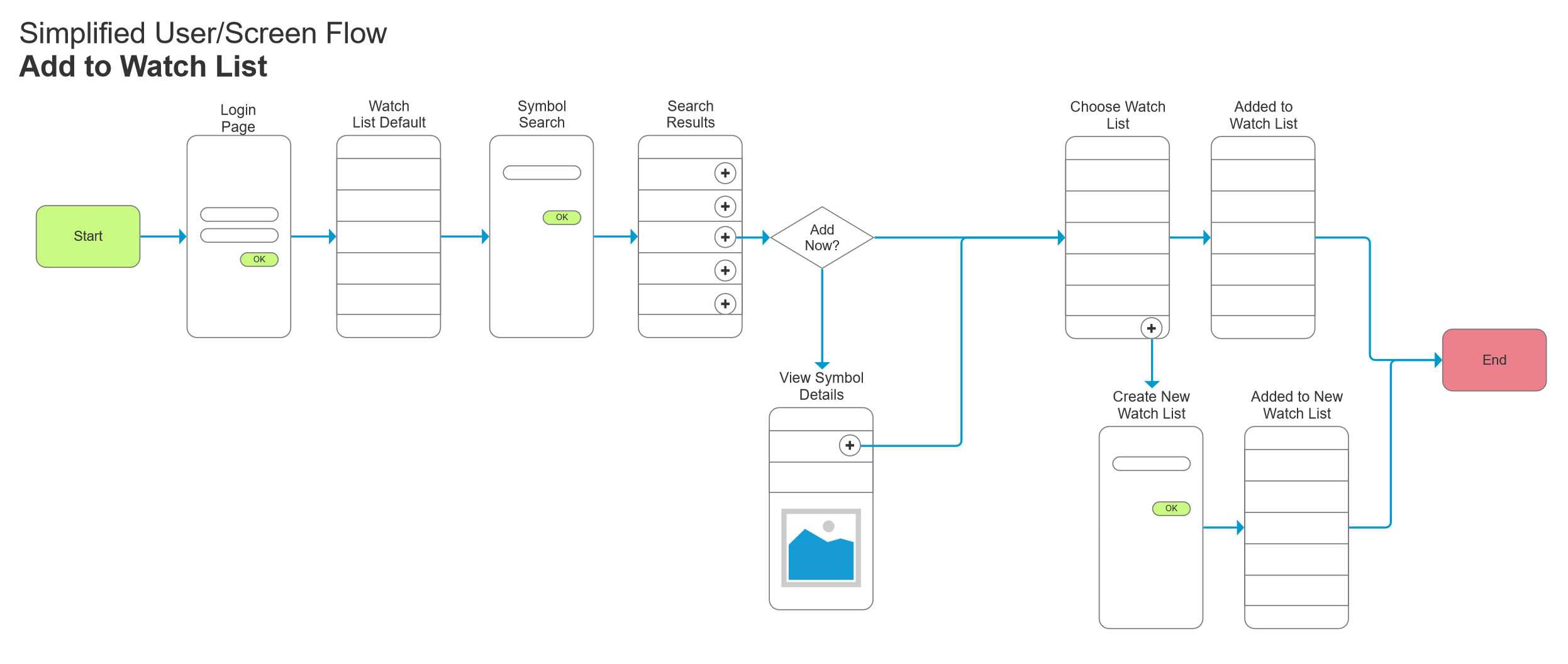
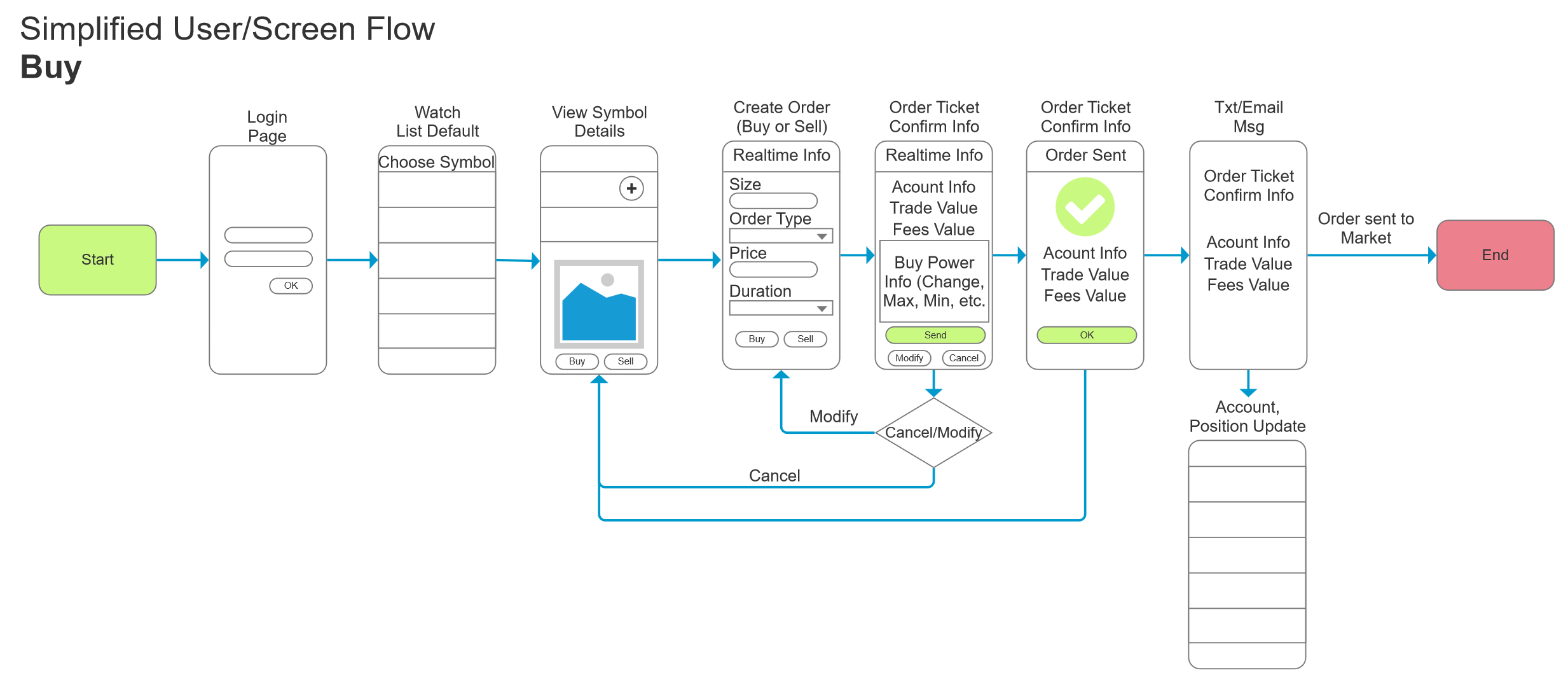
- Able to create Sitemaps and basic User Flows as well as how customers will interact with the new trading platform
- This was a big time saving opportunity in our planning sessions and helped manage the Agile Sprints
Part 6/10 - Design: Story Cards, Detailed User/Screen Flows
Iterative Design of Elements on the Screen
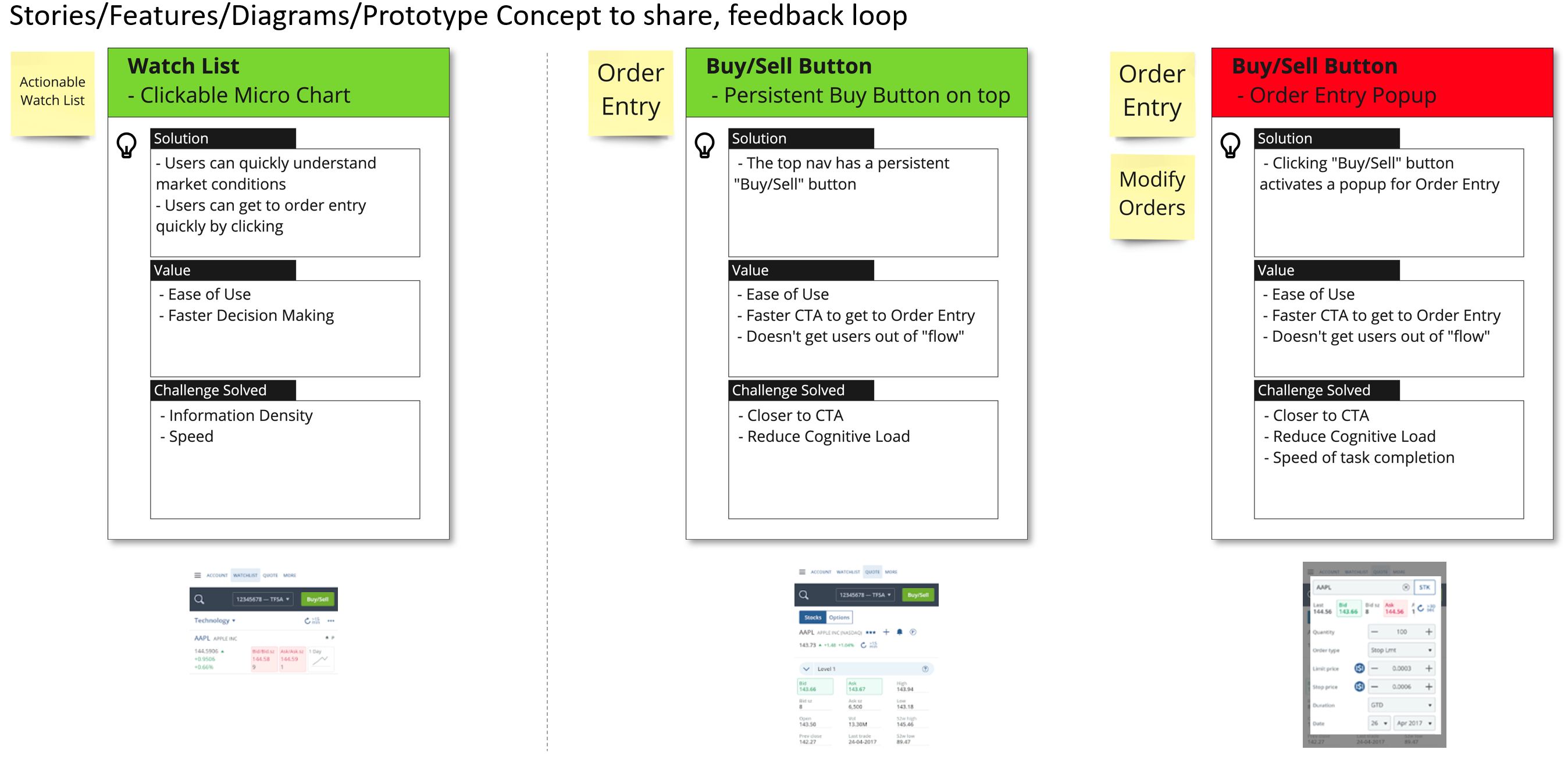
The next step was to create Story Cards and User/Screen Flows.
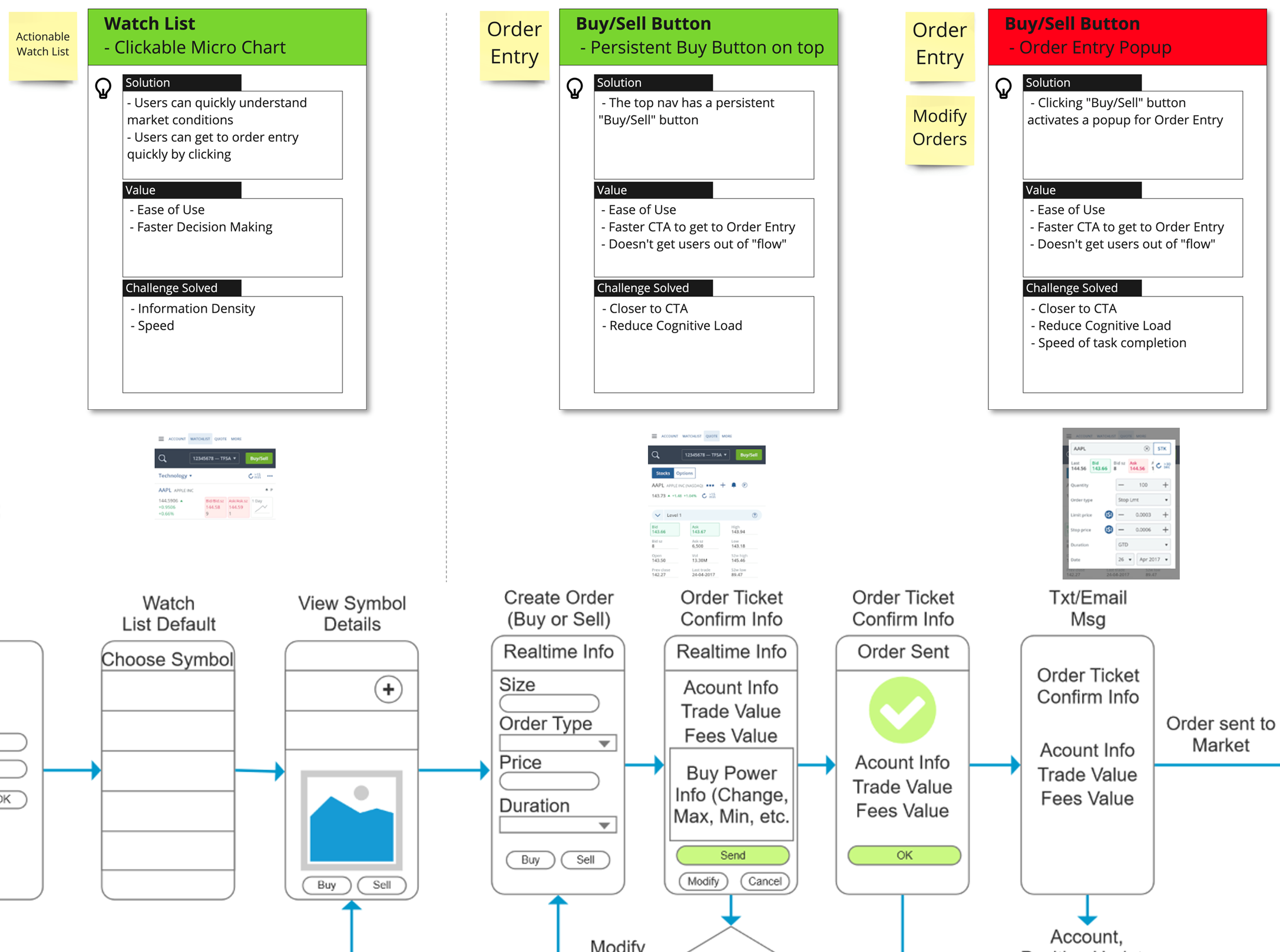
After taking a feature from the prioritization list, we used the "Solution > Value > Challenge Solved" model to create Story Cards; quick Wireframe mockups were made during workshops to help visualize each Story Card.
It's a common misconception that only User Stories can suffice; for apps that need Information Density for Productivity Decisions, User Stories on their own don't provide enough context for more visual and interactive heavy applications.
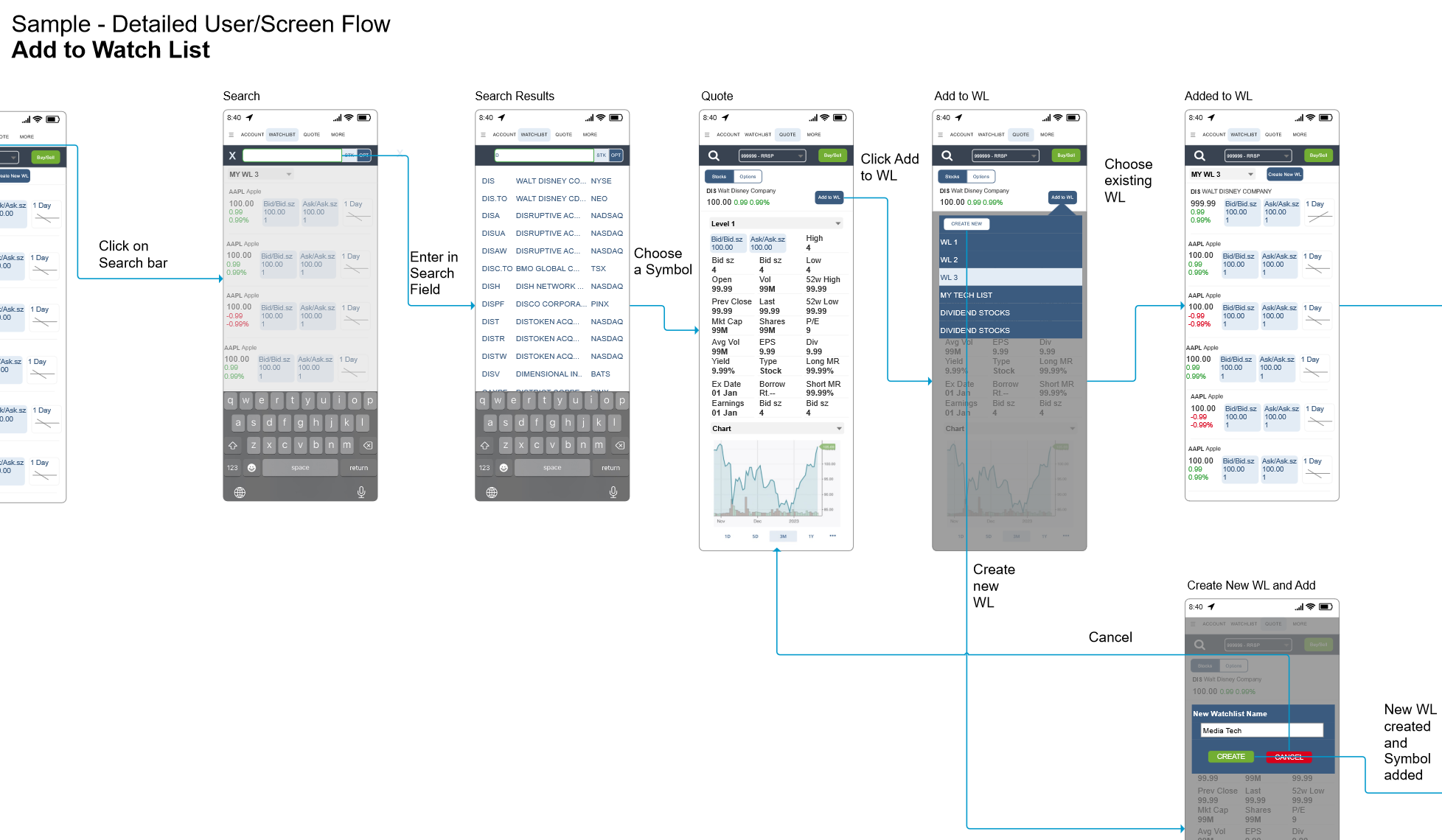
More detailed User/Screen Flows were created to detail how to satisfy the Story Cards.
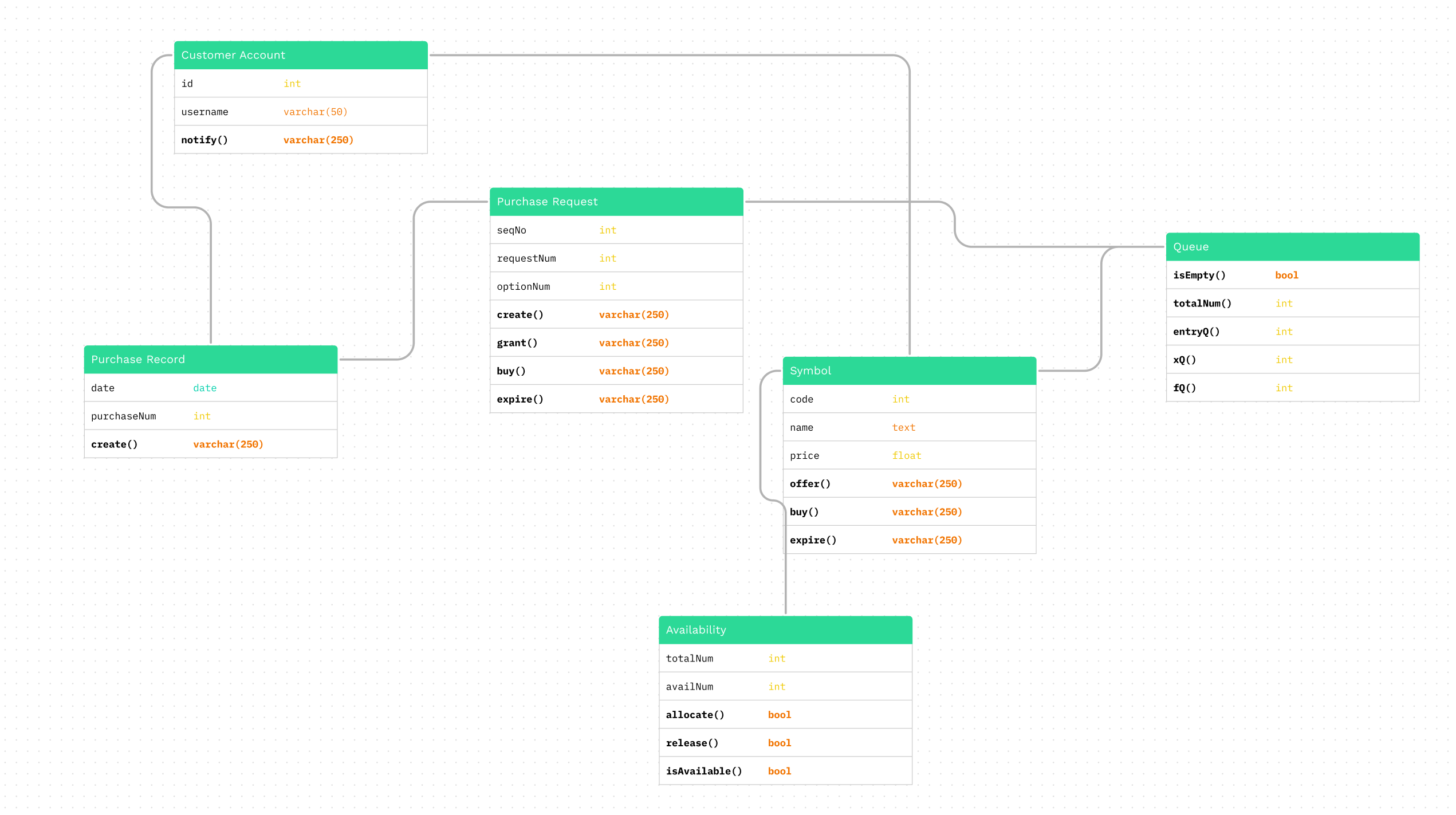
These deliverables are especially important for both front-end and back-end Developers so they can plan out their development process, as well as Business Operations staff to plan and execute on Product and Customer Support needs
Together, these help understand how many story points and prioritization for development Sprints
Part 7 - Develop: User Stories
Start the Development Process
Once the Story Cards were complete, I created User Stories, based on the standard model: As a "type of user" > I want "some goal" > so that I can "some reason or outcome"
Sample User Stories
- As a user, I want to be able to place buy and sell orders quickly and easily, ensuring efficient execution of my trades
- As a user, I want to be able to create a personalized Watchlist of stocks, so I can easily track the performance of my chosen investments
- As a user, I want to receive real-time stock price updates and alerts, so I can make informed decisions on when to buy or sell
- As a user, I want access to detailed stock charts and historical price data, so I can analyze trends and patterns
- As a user, I want to be able to set up customized alerts for specific price levels or news events, so I can be informed and react accordingly
- As a user, I want access to more than basic financial news and analysis, so I can stay updated on market trends and company performance
- As a user, I want to be able to view and compare key financial ratios and indicators for different stocks, so I can do investment research and decision-making
- As a user, I want to be able to view my portfolio holdings and track performance, so I can have regular performance reports
- As a user, I want to have a secure and user-friendly platform with robust authentication and encryption, so I can monitor my personal and financial information
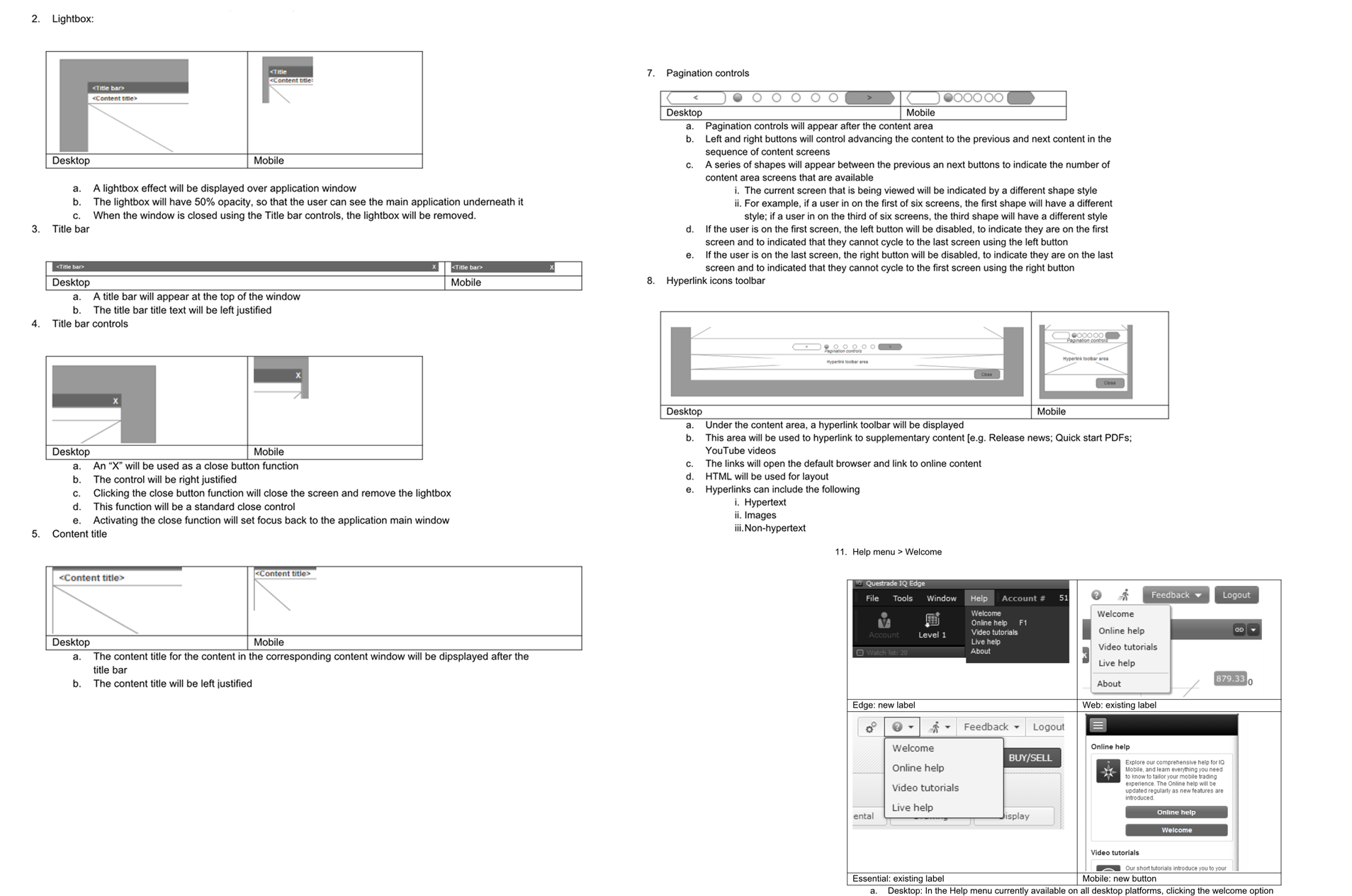
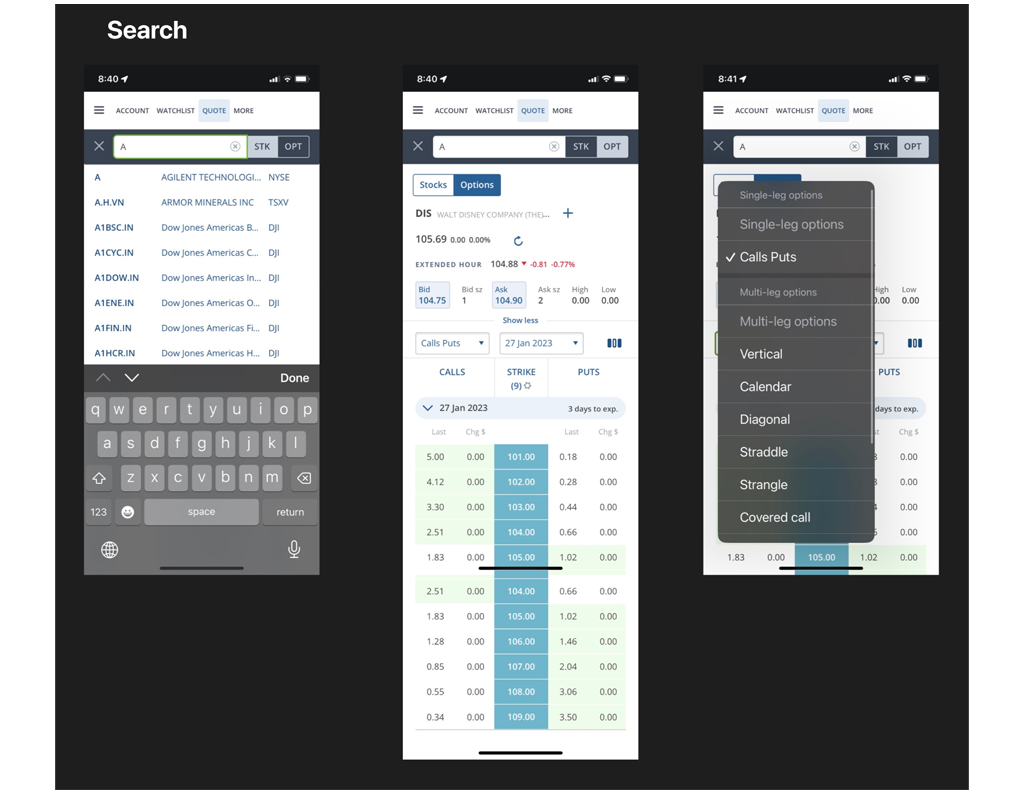
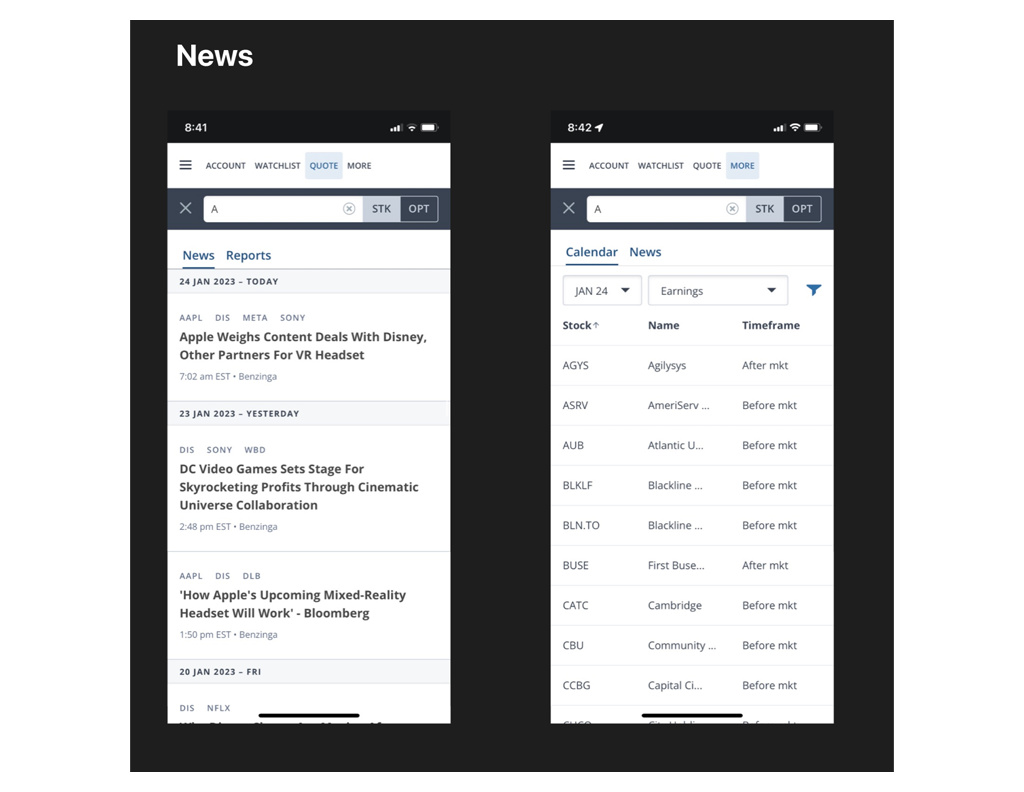
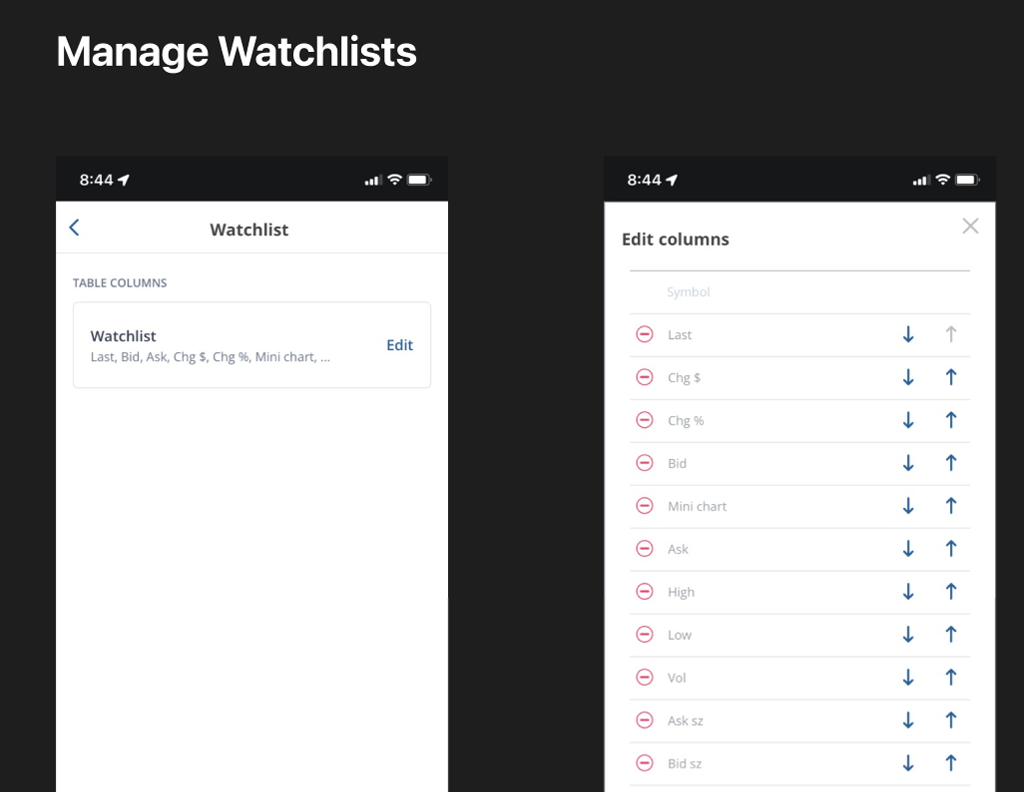
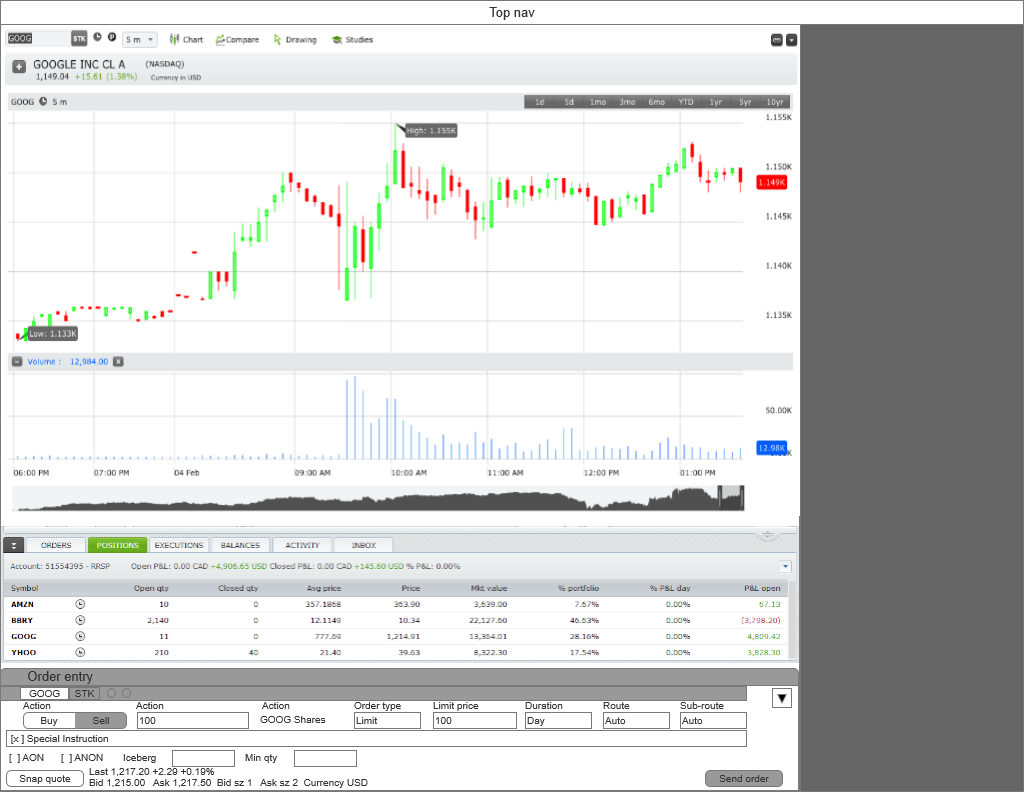
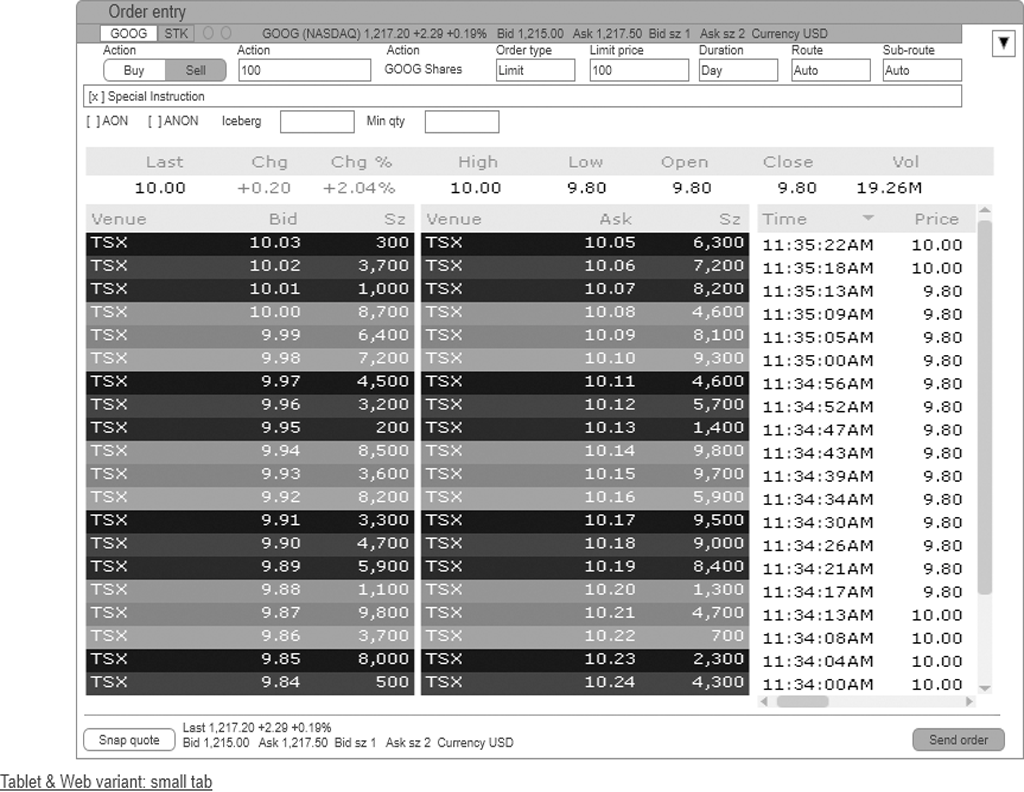
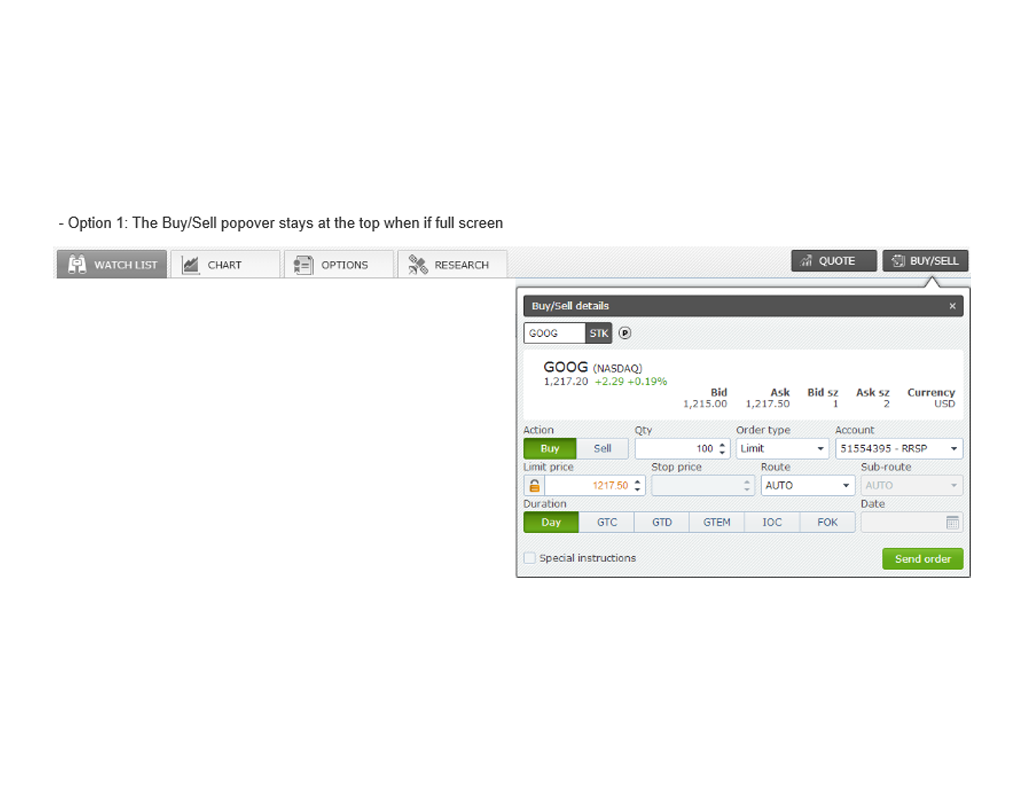
Part 8/10 - Develop: Wireframes
Sample Wireframes
Part 9/10 - Develop, Refine: Build Prototype, Usability Testing
Confirming Assumptions with Real User Feedback
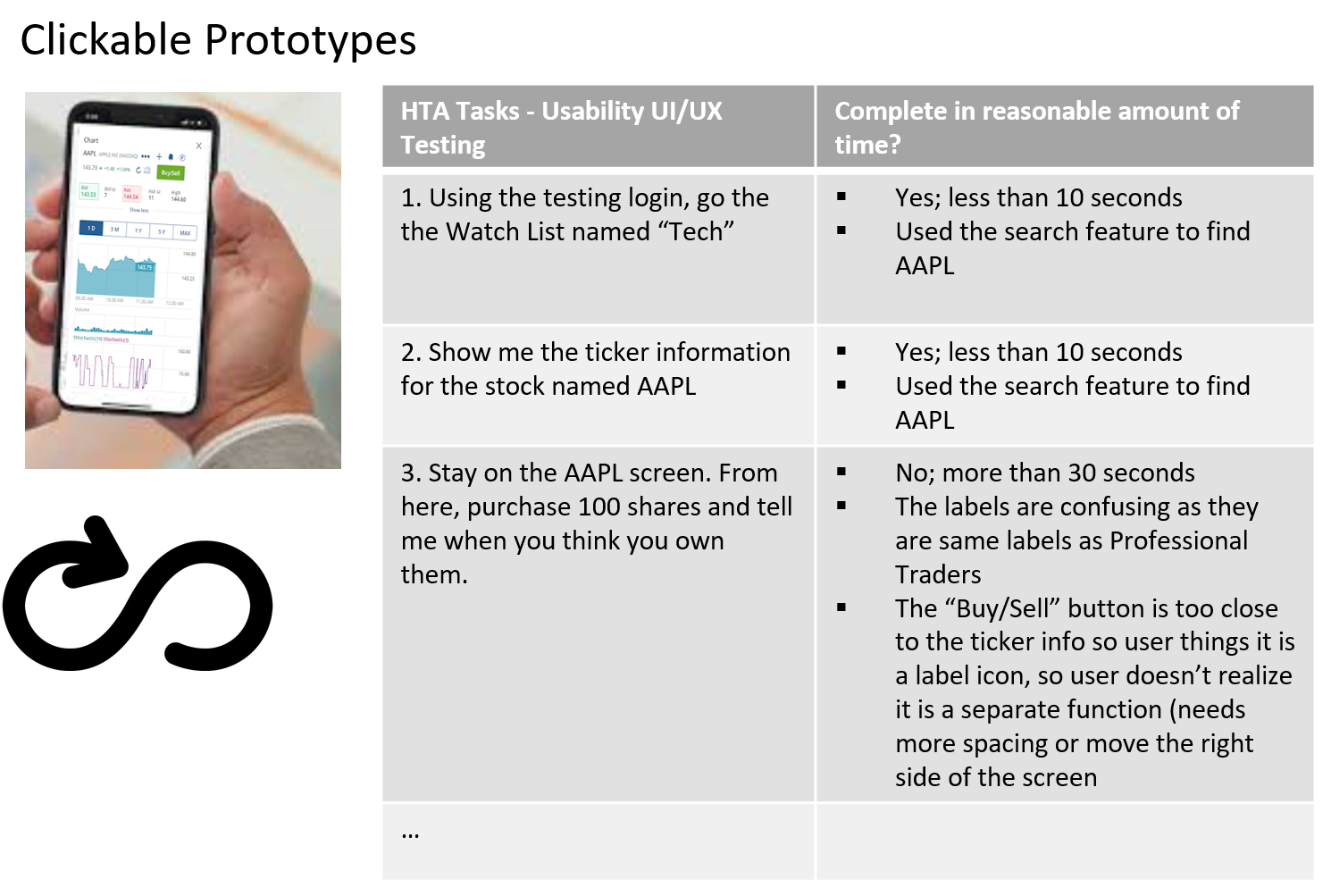
With the Interactive Prototype and code versions, we start rounds of Usability Testing.
A Usability Testing plan created so that we could get direct input and feedback from users, as we iterated through different versions during Sprints.
With the Interactive Prototype and code versions, we executed, reviewed and iterated in round of Usability Testing.
Using experienced Usability Testing facilitation techniques, we created a testing script, as well asking users to talk “out loud” of what they are doing and thinking, explain to them that it is useful to do this as "we can't see inside your head", which they were happy to comply.
Sample Testing Session
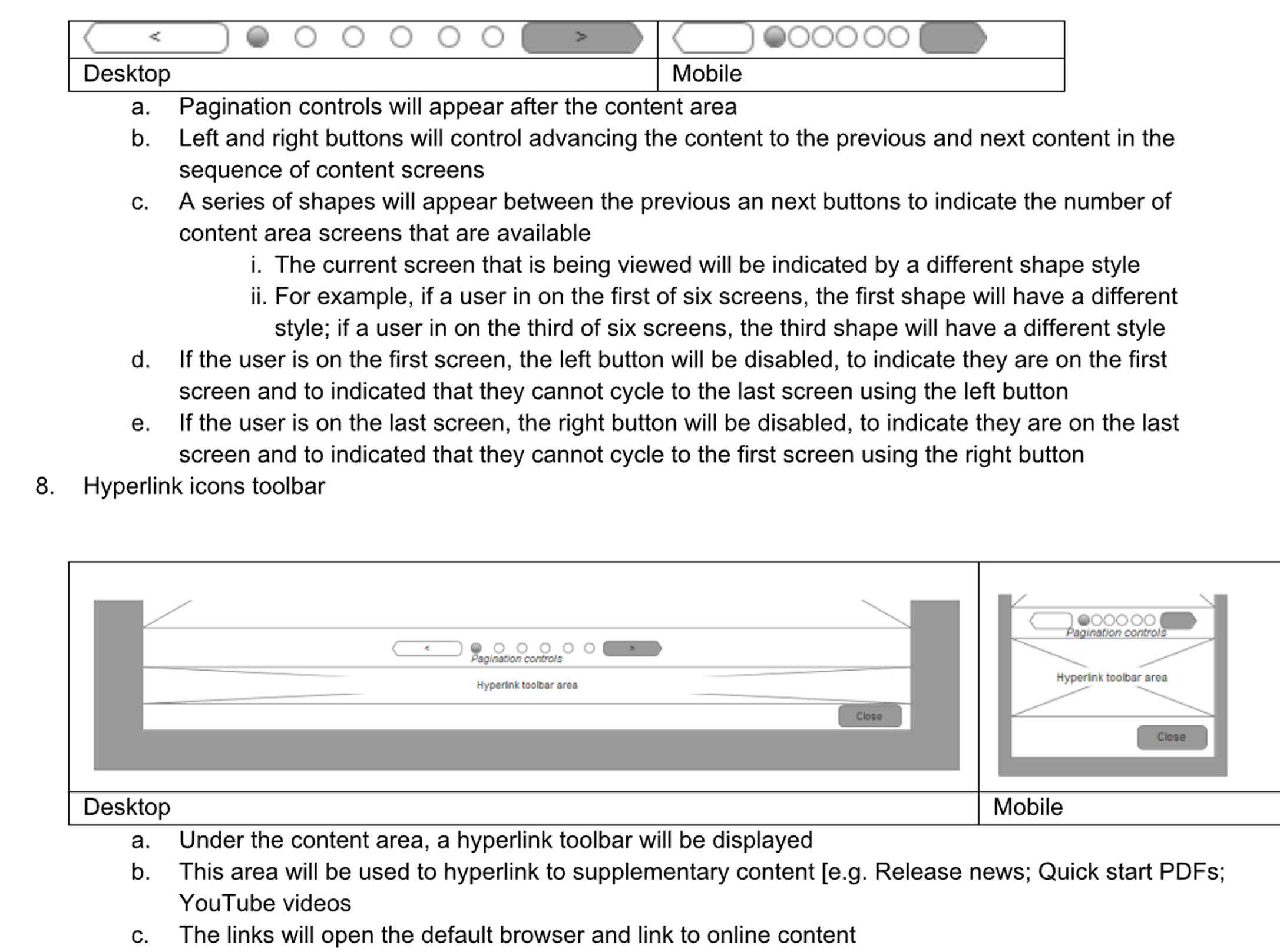
Part 10/10 - Develop, Refine: UX and Developer and Documentation
Confirming Assumptions with Real User Feedback
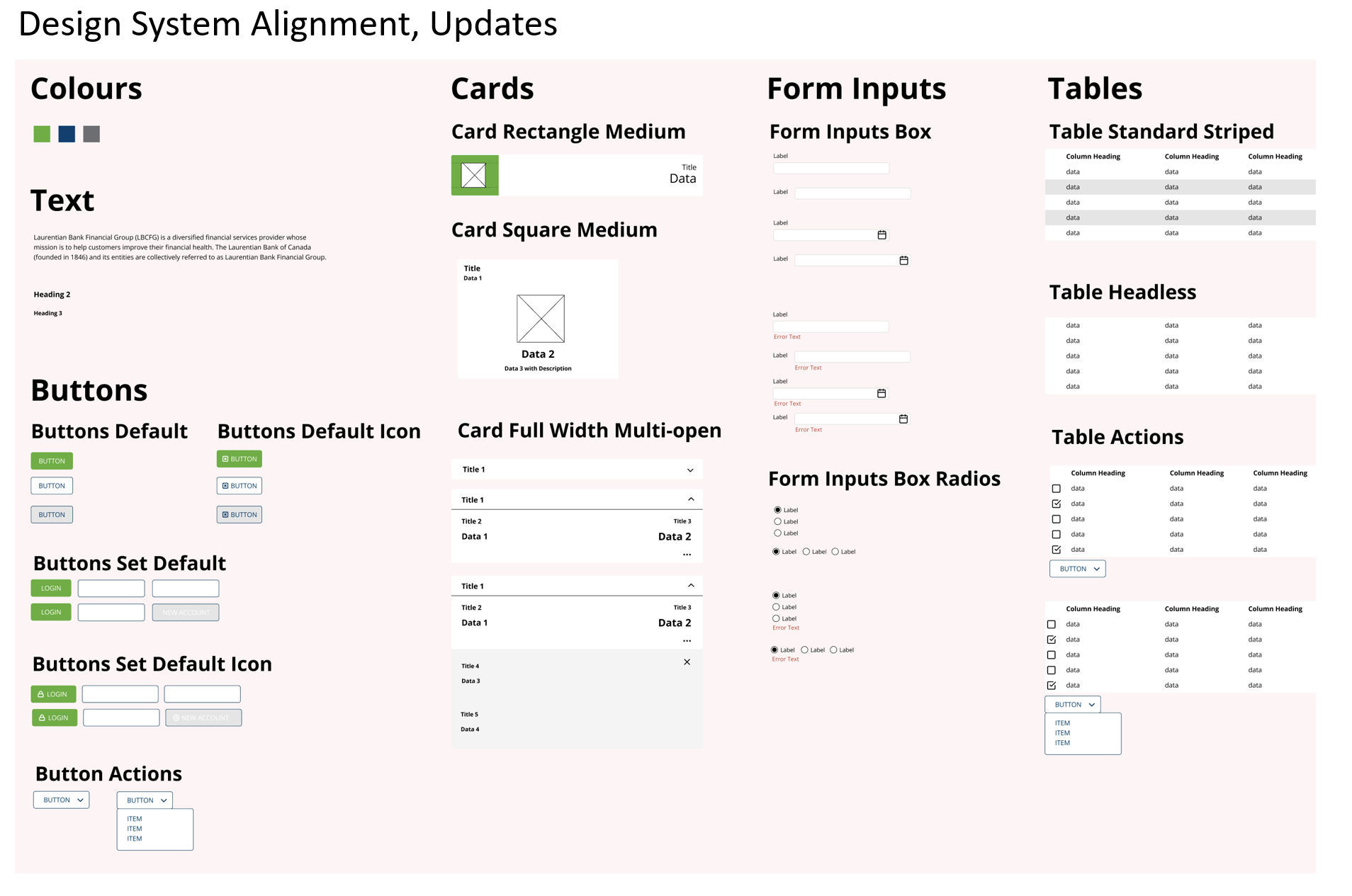
As development Sprints continued, the team constantly received updated UX Documenation.
In an Agile way, when technical constraints were found, the iterative Wireframing and Prototyping fed into the documentation to keep everyone up to date
Sample Design System and Developer Documentation